

Season 4 Episode 10
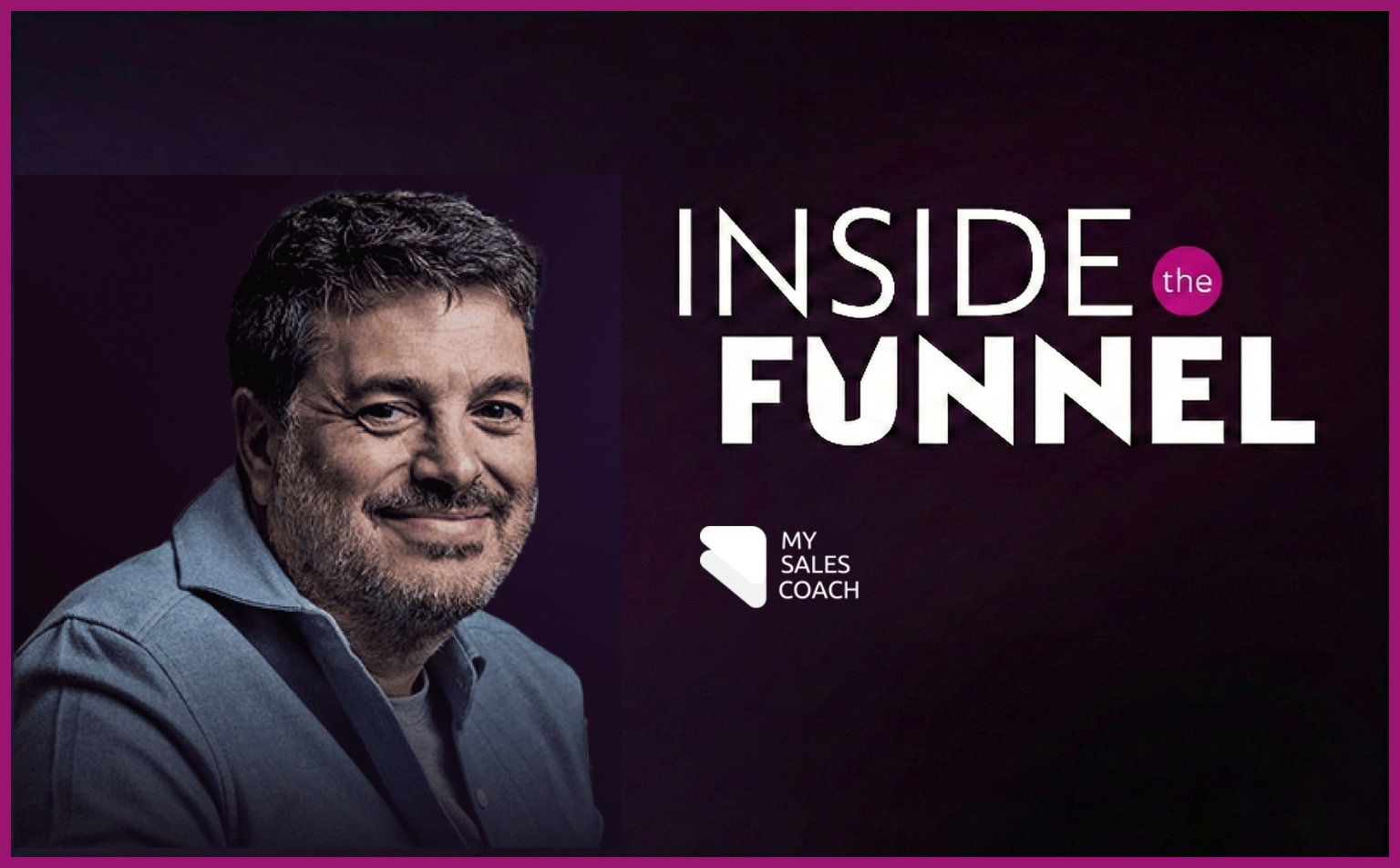
Kevin Beales
Founder & CEO, MySalesCoach

State of Sales Coaching 2026: What Leaders Get Wrong
Available on


Sales coaching is widely recognised as one of the strongest drivers of performance, yet for many sales teams, it’s falling short.
In this episode of The Insiders Podcast, Richard Lane is joined by Kevin Beales, Founder & CEO of MySalesCoach, to unpack the findings from The State of Sales Coaching 2026 report – one of the largest surveys of its kind.
Together, they explore why sales leaders believe coaching is improving, while sales reps report the opposite; how deal reviews are being mistaken for coaching; and what organisations can do to build a coaching culture that actually delivers results.
What you’ll learn in this episode:
- Why 40% of salespeople say they’re rarely coached or not coached at all
- The growing gap between leader intent and seller experience
- Why pipeline and deal reviews are being labelled as “coaching”
- The role of peer coaching and why it’s massively underused
- What sales teams really think about AI coaching tools
- How the best organisations measure coaching impact beyond short-term revenue
Listen to the full episode now to learn how sales leaders can move beyond tick-box coaching and start building teams that consistently perform.
Transcript
Richard Lane
Welcome to The Insiders Podcast by durhamlane, an industry podcast that connects the worlds of marketing and sales, one guest at a time.
I’m your host, Richard Lane, and today I’m delighted to be joined by Kevin Beales, Founder and CEO of My Sales Coach. Kev, it’s great to have you back on the show — not your first time, but thank you as always for joining us.
Before we dive in, could you give our listeners a quick overview of yourself and My Sales Coach?
Kevin Beales
Thanks, Rich. It’s great to be back.
I’m Kevin Beales, Founder and CEO of a company called My Sales Coach. We match expert sales coaches with individuals and teams to help them elevate their performance and grow.
My background is in sales tech, and through that I really recognised that coaching is the number one lever when it comes to improving performance and growth. What we focus on is making sure people are matched with the right experts and supported in a way that genuinely helps them and their teams grow.
Richard Lane
Excellent, thank you.
Today we’re going to talk through the findings from the State of Sales Coaching 2026 report, which My Sales Coach released recently. This is the second report, isn’t it?
Kevin Beales
It is, yes.
Everything we do is centred around sales coaching and its impact. We started this research a year ago, and it’s now the largest survey of its kind in sales coaching. Thousands of people have contributed across the two surveys, and because many of the questions remained the same, we can see what’s changing year on year.
We also introduced some new questions to give us a broader understanding of what’s really going on. This is very much something we plan to do every year.
Richard Lane
One thing that stood out to me straight away was that there were more sales leaders responding this year, and the split between leaders and individual contributors felt more balanced.
But the headline that really caught my eye was this: leaders believe they’re coaching more, yet salespeople think they’re getting less. How do we square that?
Kevin Beales
It’s an unfortunate headline, but you’re absolutely right.
Leaders tell us they’re coaching more frequently and that the coaching they deliver works. Around two-thirds of sales leaders say they would recommend their approach to sales coaching to others.
Despite that, sales reps tell a very different story. They say they’re being coached less frequently, and more worryingly, that the coaching they do receive is getting worse.
Forty percent of reps say they’re rarely coached or not coached at all. Last year, 29% said their coaching wasn’t valuable — that number has jumped to 45% this year. That’s a significant year-on-year increase and shows a real disconnect between what leaders believe and what sellers experience.
Richard Lane
I wonder if that comes down to perceived quality.
At durhamlane, coaching has always been central to how we operate, built around the 70:20:10 learning model. But it feels like many deal reviews are now being labelled as coaching sessions. Do reps really value that as coaching?
Kevin Beales
I think that’s exactly the heart of the problem.
Busy managers are juggling a lot, and when fewer reps are hitting quota, one-to-one time gets pulled towards pipeline and deal reviews. The focus becomes this month’s or this quarter’s number, not how to help someone improve as an individual or develop their skills.
That short-term focus means leaders feel like they’re coaching because they’re helping deals move forward. But they’re not necessarily helping sellers become better, more capable salespeople — and that’s where the disconnect comes from.
Richard Lane
If you asked everyone in the survey to define sales coaching, do you think you’d get a common answer?
Kevin Beales
No — not at all.
Sales coaching has become a very broad term and almost a marketing label. Different people interpret it in completely different ways. Even now, things like AI sales coaching are being grouped under the same umbrella.
From a leadership perspective, coaching often means time spent one-to-one. From a seller’s perspective, coaching means someone investing in their growth and helping them improve. Those are very different experiences.
Richard Lane
That leads nicely into peer coaching. There seems to be a big opportunity there, especially alongside external and manager coaching.
Kevin Beales
Absolutely. Peer coaching is probably the most underutilised part of sales coaching today.
In the past, people learned naturally by sitting together, listening to calls and sharing experiences. Now, even when teams are in the office, people are often isolated in booths. That learning by osmosis has largely disappeared.
Very few organisations are deliberate about peer coaching, yet it’s one of the clearest ways to develop future leaders while also sharing best practice across teams.
Richard Lane
Do you think the pressure for immediate results plays into this? Everything has to happen now — this month, this quarter.
Kevin Beales
It does, and it’s also about metrics.
Nearly one in four managers told us they don’t coach more because they struggle to assess the impact. Even though there’s a proven correlation between coaching and performance, it’s hard to say, “I did this, and this was the immediate result.”
Some coaching pays off quickly, but other changes — behaviours, mindset, approach — take time to translate into revenue. That makes coaching harder to justify in a world obsessed with short-term metrics.
Richard Lane
So what do the best organisations do differently when it comes to measuring coaching impact?
Kevin Beales
The best start with clear coaching plans.
That allows them to measure leading indicators before revenue outcomes appear. Revenue and KPIs matter, but behaviours and skill improvements come first.
Another big difference is that coaching starts from the top. Only a third of sales leaders have ever received training on how to coach. If leaders don’t experience coaching themselves, it’s very hard to build a true coaching culture.
Richard Lane
That really resonates. Many managers are promoted without any formal training in management or coaching, and they’re expected to make an immediate impact.
Kevin Beales
Exactly.
Managers are often promoted for being top performers, then given a completely different job with little support. At the same time, expectations are higher than ever, quotas are harder to hit, and selling is more complex.
We have to ask as an industry whether we’re really improving — or just expecting technology, including AI, to close the gap.
Richard Lane
That’s a great segue into AI coaching. Can you help us understand what that actually looks like today?
Kevin Beales
Most commonly, AI coaching takes the form of roleplay — allowing reps to practise in a safe environment and receive feedback. There are also tools that analyse calls and provide scoring or recommendations.
What sellers are more sceptical about is AI attempting to fully replace human coaching. Only 13% of reps say AI coaching is useful, and 40% say tools their organisation invested in weren’t useful at all.
AI has huge potential, but right now many sellers find it underwhelming.
Richard Lane
That’s interesting, because at durhamlane we’ve seen huge value from AI roleplay in accelerating onboarding — even though we’ve never really labelled it as coaching.
Kevin Beales
And that’s the key.
You’re using the technology to support learning and accelerate proficiency, not as a replacement for coaching. Where organisations buy AI tools expecting them to “solve coaching”, that’s where disappointment tends to follow.
The real opportunity is combining technology with peer, manager and expert coaching.
Richard Lane
As we wrap up, what’s the key message you’d want people to take away?
Kevin Beales
The correlation between coaching and performance is stronger than ever. Leaders who coach more frequently see better results.
Looking ahead, the opportunity is to use technology to support human coaching — not replace it. That’s what we’ll be watching closely as we head towards the next report.
Richard Lane
Kev, thank you so much for joining me and walking us through the State of Sales Coaching 2026.
For listeners who want to get involved, how can they take part in future surveys?
Kevin Beales
Follow me, Kevin Beales, or My Sales Coach on LinkedIn. Towards the end of the year we’ll invite people to participate, and the full report is available to download from our website.
Richard Lane
Fantastic. We’ll link to that when the podcast goes live.
Thanks again, Kev — and thanks to everyone listening. If you enjoyed this episode of The Insiders Podcast by durhamlane, you can find us on Spotify, Apple Podcasts and all major platforms.
To learn more about what we do at durhamlane, visit durhamlane.com.
Until next time.
Recent Episodes
-
 Brand, Content and Building Demand with Jessica CookFebruary 2026
Jessica Cook, Head of Marketing at Vector, joins Richard Lane to explore how brand, content and storytelling can strengthen pipeline performance and support sustainable B2B revenue growth.
Listen now -
 State of Sales Coaching 2026: What Leaders Get WrongJanuary 2026
Sales coaching should drive performance – yet many teams say it’s falling short. In this episode, Richard Lane and Kevin Beales explore what sales leaders need to change.
Listen now -
 How to Build a High-Performing Marketing OrganisationJanuary 2026
Jessica Gilmartin, former CRO and CMO at Calendly, joins Richard Lane to discuss how to build a high-performing marketing team and why revenue should be the focus of modern marketing.
Listen now
