Digital Manufacturing Sales Strategy – What’s Changing and Why It Matters
Estimated reading time: 4 minutes

by
Selling into digital manufacturing used to be fairly predictable.
You found the technical owner.
You demonstrated the technology.
You built a relationship and moved the deal forward.
Today, that path looks very different.
Buying groups are larger. Decision makers sit further away from the factory floor. And many of the people shaping a purchase may never speak to a vendor until much later in the process.
For sales leaders responsible for pipeline, that raises an important question:
How do you reach the people influencing the decision before the opportunity even appears?
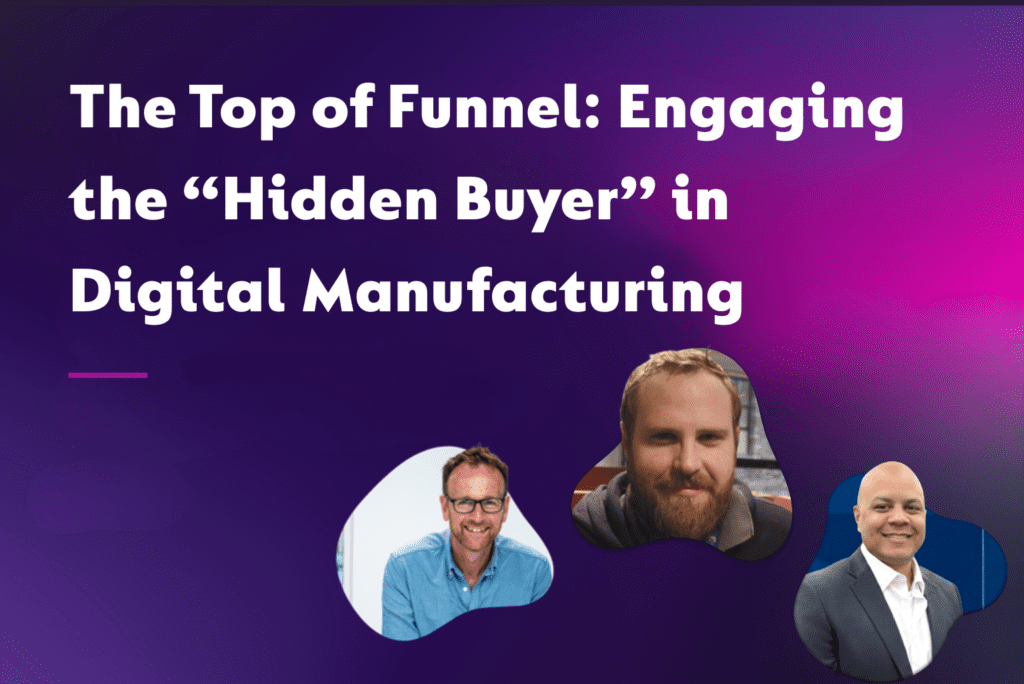
That’s exactly what we discussed in a recent webinar I hosted with Paraic O’Lochlainn (Fluke) and Phillip Lewis (Hexagon).
We explored how buying behaviour in digital manufacturing is changing – and what that means for commercial teams trying to win new customers.
You can find the full conversation here.
But first, here are a few of the themes that stood out.
What is digital manufacturing sales strategy?
Digital manufacturing sales strategy refers to the approach companies use to sell complex industrial technologies to manufacturing organisations.
Unlike traditional sales models that focused on a single technical buyer, modern manufacturing sales involves engaging multiple stakeholders across operations, IT, procurement and senior leadership.
Successful sales strategies focus on building credibility early, reaching buying groups before formal opportunities appear and demonstrating real-world proof that the technology works in similar environments.

The Buying Committee Has Grown
One of the biggest changes is the size of the buying group.
Deals that once involved a single technical decision maker now include procurement, IT, finance and senior operational leadership.
Phillip Lewis summed it up well during the conversation:
“Years ago it was always the seller aligned straight to the user of technology in the manufacturing industry… the buyers group is humongous now.”
This makes the sales process more complex.
More stakeholders means more questions, more scrutiny and more internal debate before a decision is made.
But it also changes how pipeline is created.
If the buying group is bigger, then reaching the right people earlier becomes far more important.

Buyers Want Proof – Not Just Promises
Another theme that came through clearly in the discussion is credibility.
Manufacturing organisations are careful when adopting new technology. Failed implementations can be costly and disruptive.
Because of that, buyers increasingly look for evidence that a solution has worked elsewhere before they even consider moving forward.
Paraic O’Lochlainn described it simply:
“Buying technology is hard… buyers want to know: has this technology done what it says on the tin in another customer like me?”
Case studies, customer references and real-world examples are becoming more persuasive than theoretical ROI projections.
For marketing and sales teams, that changes how trust is built early in the manufacturing buying process.
It’s less about telling the market what your technology can do – and more about showing where it already has.

Buyers Are Learning Before Sales Gets Involved
Another shift we discussed is how buyers educate themselves today.
Many manufacturing leaders form opinions about vendors long before they speak to a sales team.
Industry voices, communities and trusted experts now play a role in how companies discover new technologies.
Phillip Lewis shared how Hexagon has experimented with this approach:
“We started diving into the influencer world… and we’ve grown new customers out of those events.”
This reflects a broader trend.
Buyers aren’t just discovering vendors through traditional marketing channels anymore.
They’re learning through conversations, communities and people they trust.

How Sales Leaders Should Adapt
Put these changes together and the message is clear.
The way digital manufacturing companies buy technology has evolved – and commercial teams need to evolve with it.
That doesn’t mean abandoning the fundamentals of sales.
However, it does mean thinking differently about how pipeline is created.
Successful teams are:

Reaching more stakeholders earlier in the buying process

Building credibility through proof and customer stories

Being present in the conversations buyers are already paying attention to
These are becoming essential parts of modern digital manufacturing sales strategy.
Watch the Full Webinar
We covered these topics in much more detail during the webinar conversation with Paraic O’Lochlainn and Phillip Lewis.
If you’re responsible for sales, marketing or revenue growth in digital manufacturing, the discussion is well worth your time.
You can watch the full webinar here.
FAQ
Why is digital manufacturing sales becoming more complex?
Buying committees are larger and include stakeholders from across the organisation, including IT, procurement and finance.
What influences digital manufacturing buyers today?
Buyers increasingly rely on peer validation, case studies, industry experts and communities before engaging with vendors.
How should sales teams adapt?
Sales teams need to reach multiple stakeholders earlier, build credibility through proof of success and engage where buyers already gather information.