

Episode 7
Joey Gilkey
Founder and CEO, TitanX
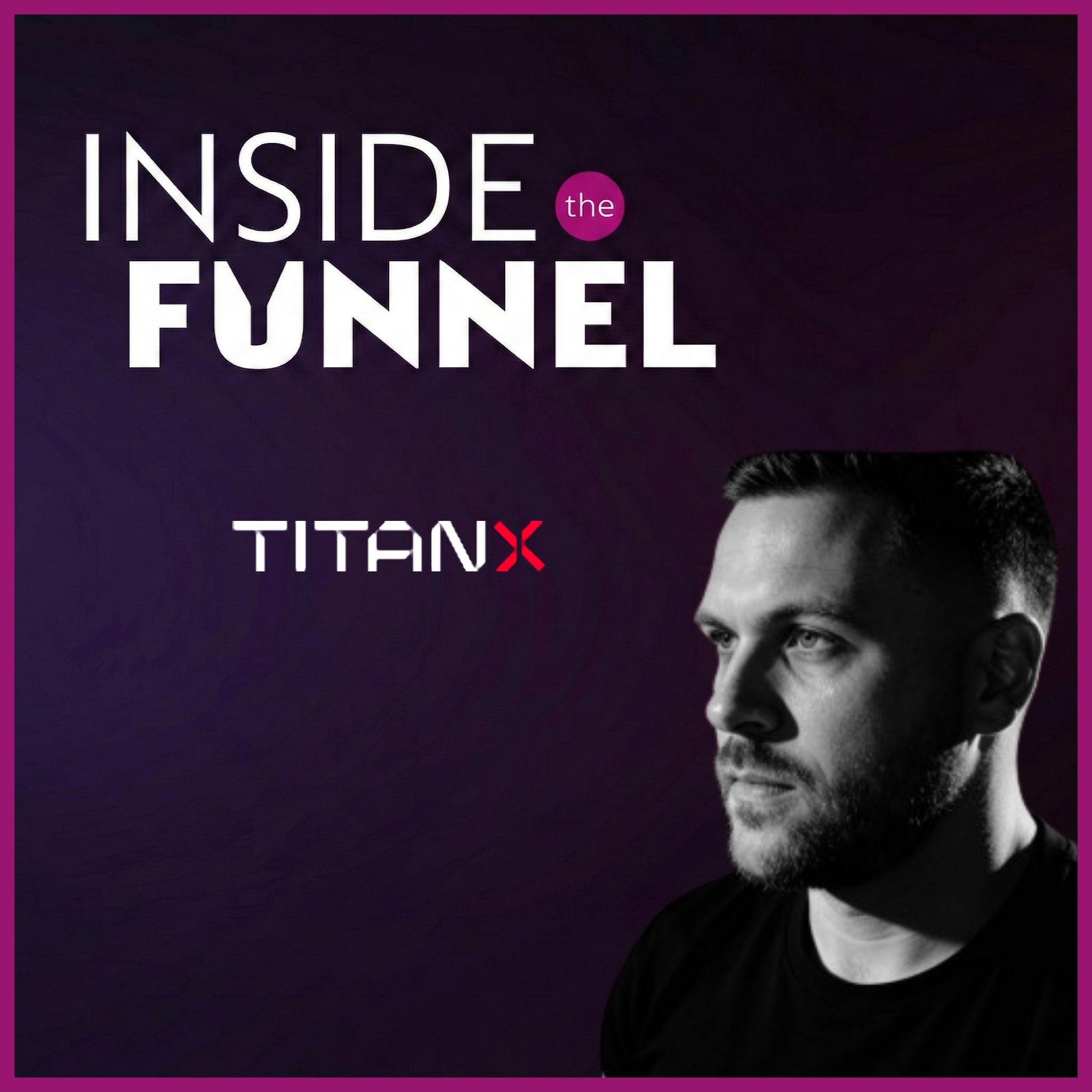
Why TitanX is betting against volume outbound
Available on


If your outbound numbers keep flattening however much activity you add, this episode is for you. Joey Gilkey, Founder and CEO of TitanX, joins Richard Lane, Co-Founder of durhamlane, to talk through what he calls the era shift: the move from volume-led outbound to precision.
Joey traces how sales went from craftsman to factory, why cheap money and COVID-era hiring pushed the factory model past breaking point, and why more dials, more tools and more automation make things worse rather than better. Then he sets out what precision looks like in practice, and why it doesn’t mean doing less for the sake of it.
What you’ll learn
- The three eras of outbound (craftsman, factory and precision) and what each got right and wrong
- Why “do more with less” so often becomes “do more of what isn’t working”
- How parallel dialling affects connect rates, conversion and qualified opportunities, according to TitanX’s data
- What “title bleed” is and how it quietly hurts your pipeline
- The four pillars of outbound, and how to turn them into a flywheel that improves with every batch
- Why the phone may be heading the same way email did
Key themes
| Theme | What Joey and Richard cover |
| The era shift | From the craftsman era (late 2000s to early 2010s), to the factory era that followed Predictable Revenue, to the volume push after 2020, and now precision. |
| Quality and quantity | Precision isn’t anti-volume. Joey’s model: do the fundamentals well, at scale, consistently, over time. |
| The leadership gap | How COVID-era hiring promoted people before they were ready, and why coaching and training suffered. |
| Tools versus skills | Why buying technology is easier to sign off than developing people, and what that costs. |
| Parallel dialling | Joey’s case, based on TitanX data, that it lowers connect, conversion and qualified opportunity rates. |
| The precision flywheel | List, message, rep and follow-up, each improved using what the last batch taught you. |
| The production layer | Why cost per dial falls while cost per meeting and cost per opportunity rise. |
| The future of the phone | Why carriers are starting to treat calls the way Google and Microsoft treat email. |
About Joey
Joey Gilkey is the Founder and CEO of TitanX, a sales intelligence and B2B data platform based in Knoxville, Tennessee. TitanX created the phone intent category, helping outbound teams identify which prospects are most likely to answer a cold call. Before TitanX, Joey spent more than seven years running outsourced sales development firms and working as a fractional VP of Sales and CRO, including founding Tribe Prospecting and running Apex Revenue. An outspoken critic of volume-first outbound, he hosted Precision 26 at AT&T Stadium in Dallas to make the case for a different approach.
Transcript
0:03
Welcome to Inside the Funnel by durhamlane, a podcast where we unpack what’s driving pipeline and revenue growth in modern B2B.
0:10
I’m Richard Lane.
0:11
I get the chance to speak with brilliant sales and marketing leaders about what’s going on inside their world, what’s working, what’s not, and what you they’ve learned along the way.
0:19
I’ve always believed the better questions lead to better conversations, and that’s exactly what this show is about today.
0:25
I’m delighted to be joined by Joey Gilkey, founder and CEO of TitanX Joey has spent his career in outbound running sales development, development agencies and working as a sales leader before building Titan XA platform that created the phone intent category.
0:39
Joey Massive, welcome to the podcast.
0:41
Grateful be back.
0:43
And it was good to hang out with you in Dallas too.
0:44
Well, let’s get started there.
0:46
So the, the point of of this episode is, is really to talk about what you’ve turned the the era shift from volume to precision.
0:54
Yeah, was really thrilled to be with you in Dallas at Precision 26.
0:58
So Joey sort of let the audience know what that was, why it was important and what came out of it.
1:05
Sure.
1:06
Yeah.
1:06
Well, I think first, you know, Titan X, we’re a relatively young company in the grand scheme of things, but we’ve had a lot of traction.
1:13
And I think the first version of Titan X, we somewhat create a category around this idea of phone intent.
1:20
And as we have looked to assemble more of the puzzle pieces that are part of a much larger vision for us, which is this idea of precision, which we’ll get into, you know, we’re still in category creation mode because I think that as we can kind of talk about like where the market is still at, but I think what the market is, is somewhat begging to leave.
1:37
But with and with with I wouldn’t say a viable alternative to go to.
1:42
At least this one communicated the goal of precision.
1:44
And what it was for us was we knew that we’re in category creation mode and we have all the data to support it.
1:50
We wanted the environment and the venue for us to be a special event that required a little bit of a unique, I’ll say setting.
2:00
And So what we did was we decided, well, one, we know our market, our market is CR OS and VP’s and we know that a lot of us are athletes are competitive.
2:10
And So what would be a venue that would you know, at least at a minimum explain that and so or reflect that.
2:16
And, and so we decided on, well, let’s go rent out an NFL stadium for the Brits of the group at EMEA, NFL being the National Football League.
2:25
So let’s go get a stadium.
2:26
And so we, we started looking around, we ended up landing on Dallas Cowboys Stadium, AT&T Stadium in Dallas.
2:31
And the entire goal of this event was very unique because our whole vision for it was, you know, and I kind of mentioned this in Dallas was a stadium has 80,000 seats.
2:41
And typically the purpose of a stadium is to get as many people in the seats as possible.
2:45
But that would be the antithesis of what we believe precision to be.
2:49
And so our whole goal was to be, how do we be extremely intentional and show the impact of fewer.
2:54
And so for us, it was an invite only about 130 ended up, 150 were on the initial registration.
3:00
And so our goal was to twofold, one of which was to, to put our, our flag in the ground on what is precision as a category.
3:09
And let’s support it with data and, and really get impactful people in the room to develop a widespread, even though a small number of people, you know, being 150 versus I probably could have gotten a couple thousand there if I just posted to LinkedIn about it.
3:22
How do I get a, a, a room of highly influential, impactful people to develop a conviction all at one time around this and support it with data that’s really hard to refute.
3:31
So that was, that was option one or, or goal number one for us.
3:35
Goal number 2 was this coincides really nicely with us creating what we believe to be the surface or the solution that will be a flagship in this precision era.
3:46
And that was our product launch of what we can call Titan X2 Point O for now at least.
3:50
So I think that you can tell me because you were there as an attendee and I was there kind of running around doing logistics and speaking and all this kind of stuff.
3:57
But I think we’re pretty successful at that event.
3:59
Yeah.
4:00
And I think maybe just to really paint the picture for our listeners here, Jimmy, I mean, 8000 thousand sees the stadium with 130 people in it.
4:10
I mean that really resonated enough and I think I think 1, you know, as a Brit going to America, you guys do things big that really tax.
4:19
This is known for doing, you know, everything’s bigger in tax that really came that really came across.
4:25
But I, but I, I think what I hadn’t really appreciated before coming out was just how well suited that whole picture of big with, with a very small audience was in terms of in terms of your message.
4:40
I thought it landed really well and I thought the team did a did an excellent job.
4:44
So it was.
4:45
Yeah, congratulations on it because I thought it was a, you know, fantastic, fantastic imagination.
4:52
And also really what well run event.
4:55
I appreciate that the team worked hard at that.
4:57
Yeah, totally.
4:59
And so, yeah, you mentioned that precision as a category.
5:02
I, I, I think the thing I would like to spend probably most of this, this episode talking about is, is what you’ve called the the era shift from volume to precision.
5:13
Maybe let’s get started by helping people understand what that, what that means.
5:18
Because I’m, I’m super excited that there’s, there were voices saying this, because we at durhamlane, we’ve always been around quality versus quantity, but you need both and our mantra #5 quality times, quantity times, consistency.
5:32
And I think that the challenge of precision is it doesn’t, it doesn’t negate doing quantity as well, right?
5:40
It’s just that we, we cannot allow ourselves to degrade the quality in favor of the quantity.
5:46
It’s if you can scale quality, then you should, right?
5:48
That’s, you know, our whole belief is do the fundamentals consistently or do the fundamentals at scale consistently overtime, right?
5:54
Well, there’s, there’s four components that what are the fundamentals?
5:57
How can we be exceptional?
5:58
Those is the quality part.
6:00
How do we do it at scale, meaning not just in a silo, doing fewer for the sake of doing fewer consistently is how do we commit to it over a period of time, right.
6:07
And then overtime is it has to be a long play that we’re invested in.
6:11
And so, yeah, so these eras that we talk about is, and I’m a data guy, I’m a, my team kind of jokes.
6:18
Like I very much look nostalgic at the past, but I look at the past not just for the purpose of nostalgia, but because I do think history repeats itself.
6:26
And I do also take that information.
6:29
So how do I apply that to the future?
6:30
And so if I look back, you know, and I started my career in this first era, I’ll talk about and probably many of your listeners got started then.
6:37
And I’m very fond of this era.
6:38
But if you think back to, you know, let’s say that the late 2000s to early 20 teens, I would call this era the Craftsman era.
6:47
I call it that because, you know, how was sales and and go to market, which is a newer term these days, But how was go to market really done back then?
6:54
And it was really, it was a department of one, an org chart of one that handled start to finish cold to close sales process.
7:01
And so you had a a single sales Rep account executive, if you want to call it that.
7:05
They weren’t really even called that back then.
7:06
The sales Rep and their job was to know their book of business.
7:10
They had named accounts to some degree.
7:11
It was to prospect was to hunt, it was to nurture, it was to close.
7:16
And on top of that, they also, that same person went back and they nurtured even further because retention and expansion was also due on their head.
7:25
And so you know what I, what I kind of said in Dallas was we can make arguments that was this a slower process, right?
7:32
Was that model in that era slower?
7:35
Perhaps, but I think what what the data says is slower does not necessarily mean less effective.
7:39
If anything, it can be more effective.
7:41
You could also argue it wasn’t a scalable right because you got to be fairly talented to be able to to own something end to end and have continuity throughout this entire sales process.
7:48
But I think one thing we can really say about about the Craftsman era was it was an accountable motion.
7:53
It was a precise motion, right?
7:55
And there was relationship that had a thread from the same person throughout the whole thing, which I’m a big believer that sales is just a transaction between two parties based on trust.
8:04
And how do you rebuild trust while you have a relational thread that has continuity throughout?
8:08
So there were Craftsman and 2011 hit and a book hit the market.
8:12
It didn’t really take traction until, you know, 2012 and then the market really flooded to this motion, which was predictable Revenue came out by Aaron Ross.
8:20
He came out of Salesforce.
8:22
The whole promise in the subtext of her, the subheading of his book was turning your business into a sales machine, right?
8:28
And so we call this era moving from Craftsman era to the factory era.
8:32
Why?
8:33
Because we took this Craftsman and we just made them a singular station of multiple stations on a factory floor assembly line.
8:40
Predictable revenue was all about specialization.
8:42
At least that’s what it was an air quotes, what I’d call it.
8:44
And it was this idea of saying, OK, well, this one person owns all these functions, top of funnel, bottom the funnel and even retention right beyond the funnel.
8:52
And we said, well, why don’t we split it and say, Hey, we’re going to create sales development reps or business development reps that are going to be top of funnel and do the quote, UN quote grunt work.
9:01
And they’ll set the opportunity of the meeting.
9:03
The account executives now in the middle, they’re going to receive that, nurture it and close it.
9:06
Once they close it, it gets passed off to account management and customer success.
9:10
And I say specialization model really just means it’s a headcount model.
9:14
It’s turned into how do we scale headcount in order to scale growth?
9:16
And it kind of worked, right?
9:18
This is the thing we have to be clear on and be honest with is like, it did work, but it worked for a couple of reasons.
9:23
One of which was labor was plentiful, capital was relatively cheap, and so we could afford to build these infantry or army models where it was a headcount model.
9:33
But like with anything, if the whole market moves to a model that’s starting to increase in headcount and increase in therefore activity, you’re also going to create saturation.
9:42
And when you create saturation, you naturally create commoditization.
9:45
And commoditization eventually is a race to the bottom.
9:48
And you see that in literally everything in life.
9:50
The more you increase something and create saturation, you will eventually create a race to the bottom.
9:54
And So what happened was we had this model that was very Craftsman centered.
9:58
We then put the Craftsman on a station and created multiple stations on this floor.
10:02
We increased head count, which created volume in the space, which then created this issue of saturation commoditization.
10:07
So effectiveness started to drop off.
10:09
But then the next era came and this is the era that we are on the back tail end of 2020 happened, which was a Black Swan event, COVID-19.
10:16
We all lived through it.
10:17
We all know it very we’re very familiar with it.
10:19
And what happened during 2020 and 2021 was we had a work from home mandate and our sales force that was in office and we built this culture around this head count, head count model went home.
10:30
And when people start working from home, they start asking the question, well, if I can work from home and I can work anywhere, why would I work here?
10:35
And then people started to move and shift and then the war on talent came.
10:40
And when there’s a war on talent, you pay more money to keep your good talent, you pay more money to go acquire new talent and attract talent.
10:47
And so cost started to inflate.
10:48
So you have this interesting dynamic of volumes increasing and costs are also increasing and volume increases production or the the quality of the outreach and the conversion metrics drop.
10:59
And so you have costs going up while production’s going down.
11:02
Not to mention you had free and cheap money flowing into the market all at once.
11:06
You had stimulus money, which is free.
11:08
You had institutional capital where debt was basically next to 0% interest rates.
11:12
And so when you have all this free and cheap money flowing into the market, where does it go?
11:16
Well, it comes to us in our department’s revenue.
11:19
How do we go create, capture demands and play the revenue acquisition game.
11:24
And on top of that, and I’ll finish my, my soapbox here, is that money also flowed to automation, innovation and then AI, which is really, you know, in air quotes.
11:35
I will say, let’s use automation to scale this motion further.
11:40
Well, what it really meant was we’re going to dump automation on top of funnel work and we’re going to flood the market with even more activity and create more saturation.
11:48
And so production got harder and harder.
11:50
And so we get to the end of the, we’re still in the volume era because we still see people buying the parallel dialers.
11:55
We still see people sending mass e-mail at scale.
11:58
A lot of people have seen the effectiveness drop off tremendously and they’re looking for alternatives, but there isn’t a sound alternative.
12:04
And that’s where I think that the precision era is coming into play because I think the true definition of the volume errors, you know, if we look at our spreadsheets, volume is any motion where you have to turn the more volume up somewhere on your spreadsheet model, right?
12:18
So I can say, you know, when the money dried up in March of 24, because stimulus money was gone and excess savings was gone, private equity and Wall Street started saying, well, now you got to do more with less.
12:27
And so that increases more technology and automation.
12:30
And So what they’re essentially saying is your targets are going to go up into the right, they always will, but your resources to go hit that is going to go down to go figure it out, do more with less.
12:38
And what people have run to to do more with less is they said, OK, we’ll have less head count, right?
12:42
Because that model is really expensive.
12:44
So we’ve got to make up for that gap somehow.
12:45
Let’s go massively increase the volume of activity to go make up for the gap, not realizing that increasing activity just creates more of the problem that got us here in the 1st place.
12:53
And so precision, to kind of wrap this in a bow, precision is doing the quite opposite, which is the definition of precision is how can we do more, meaning accomplish more while turning the quantity down of everything else.
13:06
Now we’ll get into what does that mean?
13:08
Does it mean we’re doing fewer for the sake of fewer?
13:10
No, it means we’re doing fewer for the sake of more effectiveness.
13:12
And that was the whole purpose of Dallas was to support that with the data that shows that no, when you actually go slower, slower is smoother, smoother is faster.
13:21
Yeah.
13:21
OK, Well, great, great explainer.
13:24
So thank you.
13:26
I think I think a couple of other thoughts that come to my mind, Joey, from that sort of volume era is, well, the factory era is I think somewhere along the way, people stop getting trained and coached and supported effectively because you’re in a you’re in a silo.
13:42
And so it’s got a star and a stop.
13:44
But actually, as you say, it’s like just add people in and it will work.
13:47
But I think also the, I think also the thing that maybe happened was people find it easier to buy technology or to get technology approved and signed off to solve a problem than they do from actually learn skilling, skilling up the people they’ve got to be successful.
14:03
So I think when you got promise back into it as well, the process and it’s on paper from a tooling perspective it the answers the mandate of do more with less, at least in theory that’s what we buy.
14:13
It is OK, well instead of going out and buying another $100,000 person, I can go buy a $20,000 tool and that is promising the lift and effectiveness and it unfortunately has not worked out that way for most.
14:24
And typically when it’s not implemented correctly or you know it’s not used, then actually the technology gets blamed rather than the individual.
14:32
So, well, that’s where you see adoption of tools, I mean tech stacks now, SDR tech stacks are usually floating between like 8 and 13 tools now.
14:40
And like, just from a sheer capacity perspective, it’s nearly impossible for someone to know how to own 13 tools.
14:48
And so you can keep buying incrementally cheaper things like technology, but because you can’t adopt them and you don’t have the capacity to run them how they’re meant to be run, you oftentimes find that there’s a degradation in acquiring more and more and more technology.
15:01
Yeah, we don’t blame.
15:02
We’ve tried to make, we’ve tried to.
15:05
Yeah, we’re constantly evolving in terms of the technology we use, but we try and keep it as simple and tight as possible so that we’re not putting just tech in for tech’s sake, which I think can be the the challenge sometimes for individuals and organisations when they need results.
15:21
Or as you say, the numbers on the right keep going up.
15:24
So how am I going to then react to make that happen?
15:27
So I will say too though, like to your point, you made it on coaching and training has kind of got out the window, right?
15:32
Like I think there’s a couple of reasons for that.
15:33
And I think there’s a moment in time that actually created this problem.
15:36
So one, I think during the factory or a scaling headcount, like you know what it takes to ramp a Rep, it’s a lot.
15:42
Well, when you multiply that by 3510X the amount of reps like the naturally the quality, again, when you increase quantity of something, you tend to decrease quality, the quality of the onboarding and the ramping and the training and the coaching goes down.
15:55
But I think what happened worse was COVID actually made this whole thing way worse, not because of reasons people think, people think, oh, because we wouldn’t work from home.
16:01
The remote culture has created worse coaching and training.
16:04
That might be true.
16:05
But what I think the real issue was, was when you have all this money flooding into the market, free and cheap money, and it’s going into our departments, where does it go?
16:13
Well, it goes to scaling more headcount at 1st.
16:16
And So what do we do?
16:17
We opened up a ton of new roles, especially in the tech space, and we open up a ton of new roles and costs are inflating, right?
16:24
Compensation inflating, you’re paying more and more and it’s a supply and demand thing, right?
16:28
The, the, the demand for the roles to be filled was extremely high, but the supply actually didn’t match it.
16:34
And so people started hearing, oh, well, the tech space is paying absorbing in prices for SDR’s and AES now, so I’m going to go flood into that space.
16:42
So people who had no context for technology came into the tech space.
16:46
It’s a totally different sale.
16:47
And so you have less quality talent coming in.
16:50
Not to mention when you create more demand generation roles like sales development, you have to have the capacity to receive that demand.
16:57
So AE roles inflated.
16:59
Well, there’s not enough supply there either.
17:01
So what happens?
17:02
We took SDRS who weren’t ready to be a ES, turn them into a ES.
17:05
Well, when you create more SDRS, more A’s, what else do you create?
17:08
More managers.
17:09
So you got people who are SDRS turning to SDR managers that don’t deserve to be there, or account executives turning into VP of sales that don’t deserve to be there.
17:16
They’ve not taken their licks, They haven’t learned, and they’ve only learned in these eras.
17:20
We have a leadership problem that has come because of the supply and demand issue that showed up because of COVID having an insane amount of demand and not enough supply of quality talent.
17:28
Yeah.
17:29
Why so, so that, that and yeah, that all can link back to to volume in terms of the impact.
17:36
So, so where do you maybe just the next part of this conversation then is how do you let’s play forward 235 years, we’ve shifted from volume to a precision era.
17:48
Have you got thoughts on what that looks like?
17:50
Yeah.
17:50
I mean a lot of the day, I mean all the data that we have been analysed and you got to see some of in Dallas, all the data points to when you slow down and you do less quantity naturally.
18:01
I don’t know that it’s that it makes your qualitative metrics better.
18:05
It just it finally exposes the degradation to the quality metrics from doing volume.
18:11
And what I mean by that is for example, a lot of the market in the volume area went to parallel dialing by every metric possible.
18:16
Parallel dialing penalizes you on multiple fronts in your funnel connect rate naturally and mechanically drops right by like a multiple of it, minimum 2X, sometimes 4X5X even in some cases.
18:29
And so if you just stopped parallel dialing, but you’ve had used the same reps on the same list, using the same messaging and you just stopped calling 5 people at a time, you went back to calling one person at a time, your connect rate will increase meaningfully.
18:41
So that’s penalty number one.
18:43
And the other part is OK, you go a step further in the funnel and you look at conversion rate, connect to meeting rate.
18:48
The connect to meeting rate on parallel dialing is also a multiple lower.
18:51
Why?
18:52
Because when you call 5 people at a time, I’m not prepared for who I’m about to talk to.
18:55
2nd, mechanically speaking, there’s always that awkward pause when you answer a, a cold call from a parallel dialer and that hurts effectiveness.
19:02
And so if you just stop parallel dialing, your conversion rate goes up when single line dialing again.
19:07
And so there’s a number of those aspects that that you can penalize on.
19:10
But the third thing that we didn’t talk about is in dial is what we found is parallel dialing in this volume play.
19:15
And you could take parallel dialing and equate that to like volume e-mail as well.
19:18
Is it is a data eating machine, right?
19:21
You have to keep it fed.
19:22
And when you keep good thing fed, what do you tend to do?
19:25
Well, you tend to just start shoving trash into it to fill it.
19:29
And so you start seeing what we call title bleed, right?
19:31
We have like personas or titles that we know are good.
19:34
They’re have high conversion, high conversation.
19:36
But because your Tam is not infinite, you start to go grab, you know, secondary titles, tertiary titles, and you start getting bleed.
19:43
Then you’re qualified opportunity rate actually drops as well.
19:46
And so you’re getting penalized, not some connect rate, but on conversion rate.
19:50
And then on top of that quality opportunity rate or qualified sales accepted rate because of the trash that gets thrown into the top.
19:58
SDRS are still usually comped based off of booking a meeting.
20:02
They booked a meeting with someone on a list, and that list has secondary tertiary titles that I don’t really want to talk to, which is what they’re being asked to do.
20:09
But yeah, if you take a few steps back, you’ve got the wrong the wrong data going into the machine.
20:14
And so going into the precision area, the whole idea is 1, Precision is built around intelligence, right?
20:20
And it’ll define intelligence gets a broad term.
20:23
But what we’ve done when we just shovel stuff into a machine, right, we stopped looking at and, and doing quality assurance on what’s going in.
20:31
And so part of precision is saying, OK, well, what did we learn from the last batch that can then inform how we build a better next batch.
20:37
And then when we learn from that better next batch to then inform how we build the even better next batch.
20:42
You know, when you do the volume, we talked about this hamster wheel idea, right?
20:45
The more you throw at it, hamster wheels run or spin in the opposite direction of how you run, right?
20:50
The more trash you shovel in, the faster that thing spins against, and it creates friction.
20:55
What we talk about with precision, it’s the flywheel that spins in the in the clockwise direction.
21:01
And what does that really built around?
21:03
Well, it’s built around lists, messaging Rep and follow up, the four pillars of outbound.
21:08
And if you slow down and the whole idea of precision is what intelligence can we glean from the last batch of conversations, for example, that then should inform, OK, well, the last thousand contacts we went after looks like this and we got this out of it.
21:24
OK, well, this tells me that the list was slightly off, or the messaging was slightly off, or the Rep was slightly raw off and the follow up was weak.
21:30
Well, when I know that and I take the intelligence on this thousand and I throw it in that flywheel and I go improve list message wrapper, follow up, then I make that flywheel spin just a little bit more efficiently because the next list looks a little bit better based on the tweaks we made.
21:42
And so precision is all about, OK, how do we slow down and analyze?
21:45
Let’s take the intelligence we gleaned from the last efforts and let’s let that inform the next efforts.
21:49
And then from there, we create this compounding effect that makes the flywheel spin faster.
21:53
And when it spins faster, it becomes more profitable, it becomes more efficient.
21:57
You need far less to accomplish far more.
22:01
And then that eventually is a self healing, self optimizing process as opposed to a self degrading process that happens over time.
22:08
Yeah.
22:08
So working totally in the opposite way to a volume, a volume approach.
22:13
So we’ve, we’ve always talked about thoughtful prospecting, which is, you know, akin to what you’re talking about.
22:20
But I love the idea there that it’s just, it’s ongoing analysis.
22:24
So analysis, you know, we, another thing we talk about, darling, is learn, do review.
22:29
So from a training point of view, learn, learn something, go off and do it.
22:35
Review what went well?
22:36
What could you change?
22:36
What could you do for different the next time and go again.
22:39
So similar, similar in aspects, but I really like that.
22:43
I thought the flywheel makes perfect sense.
22:46
And and you get marginal gains when you gain in any of those four areas, don’t you?
22:50
So which makes the whole more successful.
22:54
So it’s just like incremental improvements throughout a funnel creates exponential outcomes, right.
23:00
And so that’s the whole idea of precision is it’s all about incremental improvements.
23:04
And again, if you make incremental unlisted message and wrap and follow up, the naturally you get incremental improvements on conversation rate, meeting rate, qualified rate.
23:12
And eventually when you stack marginal or incremental gains on multiple stages in the funnel, you start to get really exponential outcome difference at the bottom.
23:20
Yeah, absolutely.
23:21
Well, I’m glad to say we’ve never used a parallel dialer here.
23:23
So me either quite like quite lucky.
23:27
Yeah, ironically when I acquired Front Spin back in January where they had a parallel dialer as this like secondary feature that some people are using day one, I turned it off because I’ve just seen the data.
23:38
And then once I acquired it, you know, we get to see behind the scenes a lot more.
23:41
And a lot of our assumptions around the effects or the negative effects of parallel dialing were made true through the data that we had access to.
23:50
And that then enabled us to say this tool is actually the antithesis of progress.
23:55
And so we severed it, you know, the first week we owned the company.
23:59
But I mean, and I suppose that maybe leads me to the sort of final section of, of our chat today, Joey, is how do you think the market will react?
24:07
And with within anything, there are people that are on people like me on board, get it and happy to go in this direction.
24:14
There’ll be people that love the parallel dialer and therefore won’t want to move.
24:19
What sort of objections do you think people might throw up to this era shift that you’re talking about in the category of?
24:26
Yeah, Well, it’s, I mean, at the time of us recording this, you know, we did our our virtual private launch of the new product yesterday.
24:34
And it’s funny because I didn’t even talk about the product for about 40 minutes of the 60 minute call.
24:39
I didn’t want to, I wanted to set the stage and kind of build the case for precision.
24:42
And we had this whole segment and you kind of saw aspects of this in Dallas.
24:46
But we did a little bit different on this virtual launch where we, we brought up a statement that people make and then we backed it with, we refuted it with data on the back end.
24:56
So a lot of the statements that people make, you know, for example, would be I don’t have a spam issue.
25:01
Well, the data shows that 29% of all phone numbers in every parallel dialer is marked as spam the moment you start using it.
25:07
OK, if I have a spam issue, that’s fine, but I’ll make up for it and dialing more.
25:11
Well, what we actually found was when you dial more, you actually reach less over time, right?
25:16
You don’t reach your Tam.
25:17
The third phrase people make is like, well, I’ve got a massive Tam.
25:20
I just want to reach as much of my Tam as possible.
25:22
And then we showed the data that shows when you do parallel dialing your reach rate, what we call your or your, some people call like a prospect connect rate, which is not your, it’s not your connect rate in a silo.
25:31
It’s how many of 1000 prospects, if I keep calling to this thousand, do I ever get a hold of?
25:36
You can’t even get a hold of the percentage of the market that’s actually reachable that you would have gotten a hold of your single line dialed.
25:41
And so there’s a lot of things that, you know, when people see volume, they tend to think efficiency.
25:46
But you know, one thing Rob talked about in Dallas was there’s efficiency, there’s effort, there’s efficiency, there’s effectiveness and there’s economics.
25:54
And that’s kind of the 4th E.
25:56
But effort is OK, well, how much, how much energy can I put into the system?
26:00
And that’s where parallel dial you can make $300 in a day, you know, in the same time it would have taken you to make 80 dials single line.
26:07
But then you have efficiency, which is, well, how fast can I get through that same work?
26:11
And then you have effectiveness, which is the things we talked about.
26:14
There’s different stages of your funnel where you accept the degradation.
26:17
But then there’s economics, which is from an economics perspective, the cost per outcome, right?
26:22
Your cost per dial goes down, right?
26:24
Because if I pay a Rep 100 grand and they went from a hundred a day to make it 300 a day, well, technically my cost per dial went down by 3X or 33% of the cost.
26:32
But then when you look at the degradation of each part of the funnel, your cost per conversation, cost per meeting, cost per qualified opportunity, cost per acquisition actually all go up despite your cost per dial going down.
26:42
So I think people look at things as inputs and they look at the outcomes and they don’t realize this ugly middle that we call the production layer exists where it actually shows you the real truth behind your numbers.
26:51
And so I don’t know, I think the objections we’re going to keep facing are, well, this just feels more efficient.
26:57
That’s probably the biggest, I think.
26:59
Well, I think the biggest one is probably just, we’ve been brought up thinking that more is better.
27:05
My theory on Ovid opening a bunch of roles and people moving into roles they shouldn’t.
27:09
Like a lot of these people that are now managers or even VPS came up in this era of knowing no different.
27:15
And so all they look at is I’m, I’ve used Orem for, I used Connectandsell for a few years, but then Orem came around.
27:22
It was the flashier version.
27:23
Well, now Nooks is around as the flashier version of that and they’re just looking for like the incremental gains within that model.
27:29
And they’re not even looking at, you know, one thing we talked about was there’s been 19 dialers launched in the last five years.
27:34
Companies that launched A dialer, 19 of 19 have parallel dialing.
27:39
We have the first one coming out or the 20th dollar to come out in five years that doesn’t accept and doesn’t allow for parallel dialing.
27:46
So it’s interesting.
27:46
We’re basically going to get this massive wave of volume.
27:49
Yeah, well, and people are in our echo chamber, aren’t they?
27:52
And and that’s the, you know, if you’re, if you were changing parallel dialer because it’s better than the other parallel dialer you’ve got, you’re not actually looking at the broader picture.
28:01
You’re just looking at the world you live in rather than correct.
28:04
You don’t know any clearly about it.
28:06
I will say that the receptivity of the market has been pretty tremendous as we’ve kind of led up to this launch.
28:11
I think people are feeling the pain finally.
28:13
It’s becoming very aware and apparent.
28:14
I think a lot of people are realizing that what we are doing to the phone right now is what we did to e-mail in 2022-2023, right?
28:21
E-mail you have this massive, you know, spam issue you with domains getting blacklisted and you’re going into promotions tab or spam.
28:29
We’re doing this and we created that problem by increasing automation of e-mail.
28:33
We’re doing the same thing with parallel dialing to the phone because just like we have Google and Microsoft that own whether your your e-mail gets delivered, you’ve got AT and TT mobile, Verizon, all the European markets in Europe starting to mark stuff as spam too.
28:48
You have all the telco, the telcos and carriers doing the same thing that Google and Microsoft did e-mail they’re doing to the phone.
28:53
We created that problem.
28:55
And so therefore, if we want to fix it, we have to do something different.
28:58
It’s it’s foolishness to think that if we created the problem doing this one thing, that just doing more of that thing is going to fix it.
29:03
It’s not.
29:04
Yeah, absolutely.
29:05
Yeah.
29:06
Like parallel dollars are going to be in a very interesting position here in the next two years as we really plant our flag on this, because they’re going to have to renounce what they’ve built their whole business on if they really want to come compete.
29:16
Yeah, absolutely.
29:16
Well, we’re going to we’re going to wrap up there.
29:19
Joey.
29:19
I think really, you know, like I say, it was, it was great to be at your event and a great event.
29:26
It was really interesting data that was backing up the the shift that you’re talking about and the move from volume into precision, which is something that, as I keep saying, I’m, I’m.
29:39
I’m so pleased to hear people talking about this because you know, at the end of the day, if you’re on the receiving end of someone prospecting you, you want it to be thoughtful and you want it to be meaningful.
29:51
And if it is and you’re the right person in the right company idea at the right time, then the chances are you’ll probably be interested.
29:57
So it’s sort of makes sense, right?
30:00
So it’s great to see what you’re doing at Titan X and yeah, I wish you all the all the best of the launch and look forward to partnering with you.
30:07
So I appreciate it.
30:08
Thank you.
30:08
Thanks for your time, really appreciate it.
30:10
I know you’ve got multiple launch events going on at the moment, so we’ll we’ll wrap it here and speak to you very soon.
30:17
Hi, my man.
30:18
Thank you so much for your time.
30:19
To everyone that’s listening, thank you for tuning into another episode of Inside the Funnel.
30:23
I’ve been your host, Richard Lane.
30:25
If you found this episode useful or thought provoking, feel free to share it with someone in your world.
30:30
And if you’d like to learn more about how we help organizations build pipeline, just head over to durhamlane.
30:37
Until next time, I’ll see you Inside the Funnel.
Recent Episodes
-
 Why TitanX is betting against volume outboundOctober 2026
TitanX Founder and CEO Joey Gilkey joins Richard Lane to explain why more dials, tools and activity are hurting outbound, and what precision looks like instead.
Listen now -
 Why ‘channel’ is disappearing from B2B salesSeptember 2026
Ivan Bulaev has led channel, partnership and direct sales teams at HPE, Kaspersky, AWS and now Autodesk. In this episode of Inside the Funnel, he joins Richard Lane to explore why the word ‘channel’ is disappearing from B2B sales, how Autodesk structures its sales pods, and what it really takes to build a partner ecosystem worth trusting.
Listen now -
 From Dashboards to Decisions: Building an AI-Native Revenue EngineJuly 2026
Domo CMO Mark Boothe joins Richard Lane to talk data foundations, AI enablement, and why most AI-written outreach is still slop. He shares how Domo reclaimed 200+ hours of team capacity a week, cut vendor spend, and built a seven-figure weekly AI-attributed pipeline
Listen now
