Co-founder of durhamlane, Richard is a thoughtleader, entrepreneur, and coach who loves helping people and organisations achieve high growth by developing sales skills, mindsets, and processes. With over 20 years of commercial sales experience leading both UK and global organisations, Richard develops talented sales and SDR teams to reach their potential, whilst also helping businesses accelerate their growth through our proven methodology ‘Selling at a Higher Level’. He’s a board member for the Entrepreneur’s Forum and an investor in sales technology startups.
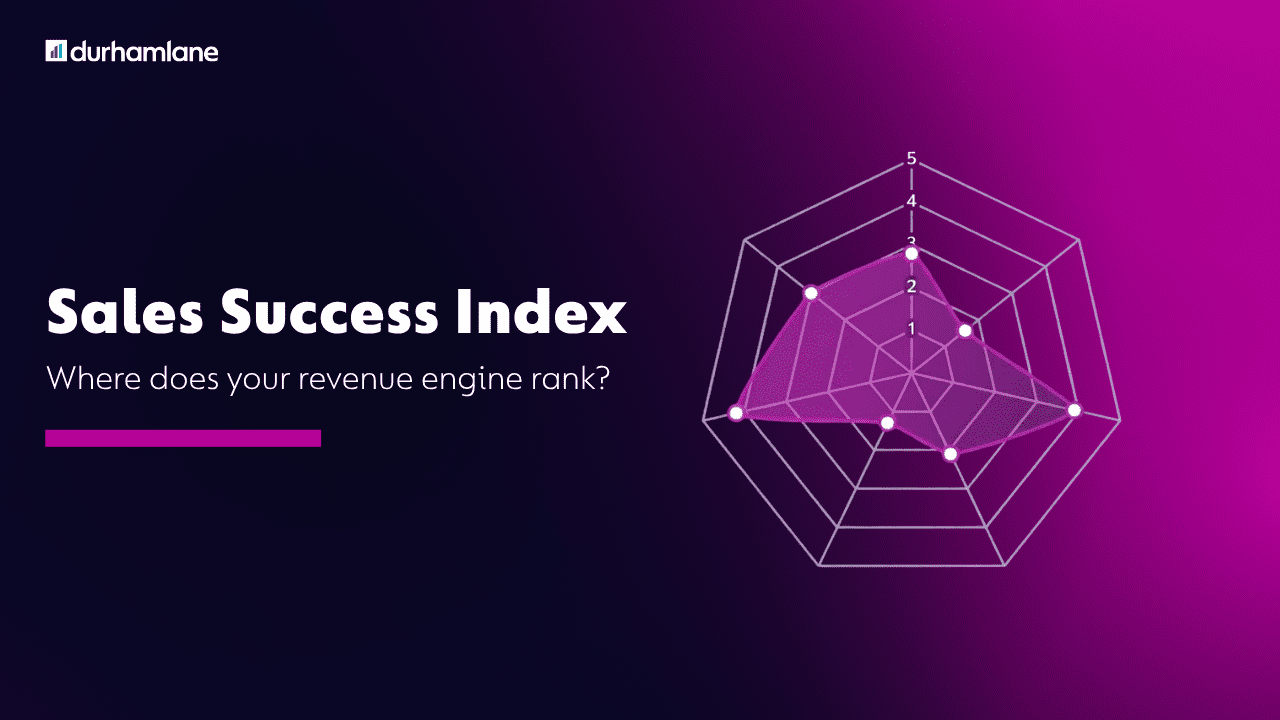
Our unique ‘Magic 35’ sales qualification framework contains seven core criteria that allows you to have sales conversations with purpose.
Magic 35 Diagnostic Toolkit
Our unique ‘Magic 35’ sales qualification framework contains seven core criteria that allows you to have sales conversations with purpose.
Quick answer
The best SDR team structure depends on sales complexity: generalist setups work for high-volume, lower-value sales, but mid-market and enterprise selling needs role specialisation — separating outbound prospecting (research and account targeting), inbound qualification (assessing fit and routing conversations), and account executives (progressing and closing). Headcount should be based on revenue targets, required pipeline, and current conversion rates rather than arbitrary ratios, with SDR leadership added as teams scale to maintain consistency.
Key takeaways:
Structure should match sales complexity: a single generalist role can work for short, low-stakeholder sales cycles, but complex B2B deals require specialised outbound, qualification, and closing roles.
Separating roles improves both outreach and conversion: distinct skillsets for prospecting (research, entry points, commercial framing) and qualification (judgement, fit assessment, routing) prevent generic outreach and inconsistent handoffs.
Size the team from revenue targets down: determine pipeline needed for revenue goals, then required opportunity volume, then the activity level and headcount needed to deliver it — not the reverse.
SDR/AE alignment on qualification criteria is critical: durhamlane measures conversation-to-meeting rate and consistently hits 36% or higher, while also tracking AE close rates for a balanced view.
Proof points from enterprise case studies: Centrica Business Solutions achieved 137 closed-won deals and 197% ROI; Intertrust Group closed deals worth £680,000; Sodexo Group generated 33 closed-won opportunities and over €13M in revenue.
Define your ICP before scaling: scaling without a properly defined Ideal Customer Profile just increases the volume of irrelevant outreach.
Hire for curiosity and resilience over experience: these traits matter more than CV history in complex selling environments, supported by structured onboarding.
The best SDR team structure
Inconsistent pipeline, stretched AEs, and low conversion rates are clear indicators that something about your SDR team isn’t working. It’s tempting to assume you don’t have enough sales development reps or Account Executives working the data, but sometimes the problem isn’t your headcount; it’s your team structure.
Is it possible that your SDR team was put together years ago and hasn’t kept pace with the complexity of the market being sold into?
While there isn’t a single “best” SDR team structure (what works depends entirely on the nature of the sale), the more complex and considered the buying process becomes, the more important it is to introduce specialisation and clarity across roles. This is particularly relevant when selling into technical industries and multi-stakeholder businesses, such as global enterprises.
Today, we’ll cover how to shape your SDR team model and align teams – whether they’re outsourced SDRs or hired internally – to close more deals.
Based on years of experience running B2B sales audits for mid-market and enterprise businesses, this article explains the best sales audit process, when to run one, the most common mistakes leaders make when doing so, and how to turn your findings into a practical revenue action plan.
Sales complexity should shape your SDR team model
The most useful way to think about SDR structure is through the lens of sales complexity.
In lower-value, high-volume environments, a generalist approach can work reasonably well. The sales cycle is shorter, the number of stakeholders is limited, and the cost of a less-than-perfect conversation is relatively low. In that context, it’s entirely workable for one person to manage outreach, qualification, and close.
That dynamic changes quickly when you move into mid-market and enterprise sales.
You are dealing with larger accounts, more stakeholders, and a buying process that often requires a degree of credibility from the very first interaction. Outbound sales development needs to be more considered, and lead qualification needs to be sharper, because the cost of getting it wrong is much higher.
Trying to cover both ends of that process with a single role leads to compromise. Outreach can become generic because there isn’t enough time for proper research, or qualification becomes inconsistent because the rep’s focus is on hitting activity targets, not pipeline movement.
What a well-structured SDR team looks like
In more complex B2B environments, the businesses with the higher close rates separate responsibilities to reflect how different the tasks are.
Outbound prospecting, done properly, is not simply a numbers exercise. It requires an understanding of the target account, the ability to identify relevant entry points, and enough commercial awareness to frame a consultative conversation. That is a distinct skillset.
Inbound qualification, on the other hand, is about judgement and speed. Somebody showing interest doesn’t automatically make them a good opportunity. Being able to assess fit, ask the right questions, and route the conversation appropriately is a different kind of discipline.
Alongside those roles sit account executives, whose focus should remain on progressing and closing opportunities rather than generating them.
By clearly defining responsibilities based on the skillset instead of expecting a single person to carry the full sales process, outreach becomes more effective, qualification becomes more consistent, and AEs spend their time on conversations that are more likely to convert. There is an efficiency that simply isn’t possible with a broader structure that sees everyone doing it all.
As teams grow, adding a layer of SDR leadership helps maintain that consistency. Without it, even a well-designed structure can struggle as different individuals interpret the role in slightly different ways.
Working out how many SDRs you need
In more complex B2B environments, the businesses with the higher close rates separate responsibilities to reflect how different the tasks are.
A good starting point is your revenue target and the amount of pipeline required to support it. From there, you can look at how many opportunities you need to create, and what your current conversion rates suggest about the level of activity required.
Only then does it make sense to think about how many people are needed to deliver that activity at a consistent level.
What matters more than a headcount ratio is whether the team has enough capacity to generate pipeline without resorting to low-quality outreach or qualification. Under-resourcing will show up as gaps in pipeline coverage, while over-resourcing leads to declining standards as reps are pushed to find opportunities that aren’t really there purely to hit productivity targets.
Aligning SDRs and AEs
Even with the right structure in place, results will fall short if SDRs and AEs are not working to the same definition of a good opportunity.
This is one of the more common friction points in mid-market and enterprise sales teams. SDRs are measured on meetings booked, while AEs are measured on revenue closed, and the connection between the two is not always managed closely enough.
Teams must have clarity on qualification criteria. When both sides agree on what constitutes a worthwhile conversation, the quality of handoffs improves, and so does trust between teams.
Shared KPIs and metrics also play a role. Looking beyond meetings booked to include conversion into pipeline and eventual revenue creates a more balanced view of performance.
“In the first 24 months we’ve accomplished close to ten million dollars in white space markets through the durhamlane Siemens Healthineers collaboration. Helping us to prove the value of Hybrid Marketing and Sales.”
– Rosanne Darrow, Marketing and Communications, Siemens Healthineers
Intertrust Group: Closed-won deals with a total value of £680,000 to date.
Sodexo Group: 33 closed-won new business opportunities, more than €13M in revenue
Remember, regular feedback loops are important for continued success.
Scaling an SDR team without losing effectiveness
Scaling your SDR team can add pressure to increase output, which is where quality can start to slip. One of the more reliable ways to avoid that is to ensure your Ideal Customer Profile (ICP) is properly defined before adding more people. If targeting is vague, scaling simply increases the volume of irrelevant outreach.
From there, it becomes a question of capturing what works and making it repeatable. That does not mean scripting every interaction, but it does mean having clear frameworks for messaging, sequencing, and qualification. We use a ‘Selling at a Higher Level’ methodology to ensure all conversations are consultative and value-led.
Technology, particularly AI-led sales tools, can support you when used carefully. They can help with research, prioritisation, and segmentation, but they are not a substitute for understanding the buyer. Review conversations, track conversion rates at each stage, and address issues early to prevent small problems from becoming systemic ones.
In more complex environments, the qualities that matter are not always obvious from a CV. Curiosity, resilience, and the ability to understand a commercial problem tend to have more impact than prior experience alone.
A hiring process that reflects the reality of the role usually produces better outcomes. Asking candidates to think through how they would approach an account, or to run a short prospecting exercise, gives a clearer sense of how they are likely to perform.
Once people are in role, structured onboarding and clear expectations make a noticeable difference. Without that, even strong hires can take longer than expected to become productive.
Where outsourcing can support SDR performance
There are points where building everything internally is not the most effective option.
When outbound capability is limited, or you’re struggling to understand how your team can improve performance, or when there is a need to generate pipeline quickly without adding permanent headcount, working with a specialist sales development partner provides both capacity and expertise.
The important factor is how that partner operates. The most effective SDR providers do not sit separately from your team; they work alongside you, align closely with your target market, your messaging, and your sales process.
This is the approach taken by durhamlane. Rather than focusing on activity alone, our emphasis is on creating qualified sales opportunities that move through the pipeline and convert. This includes having a sound go-to-market strategy, defining the right ICP, applying a proven sales methodology, and using AI-led technology to support the full process.
Because our work is so closely aligned with internal teams, the handoff into AEs is seamless, and with CRM integration, we’re able to measure direct impact on revenue and ROI.
The best next step
Let’s assume your SDR team is in place, but pipeline is not converting as it should. It’s worth reviewing how sales roles are currently defined and how they connect with the rest of the sales function. This usually reveals where to make adjustments to your team structure, whether that’s introducing clearer specialisation or improving alignment with AEs.
durhamlane works with sales teams to build and deliver SDR services that generate qualified opportunities and closed revenue. Speak with one of the team today.
Table of contents
Free Resource
Magic 35 Diagnostic Toolkit
Our unique ‘Magic 35’ sales qualification framework contains seven core criteria that allows you to have sales conversations with purpose.
We’re always open to hearing from ambitious organisations that are looking to scale but are unsure how. Get in touch to see how we can help overcome your sales challenges with proven SDR outsourcing and B2B sales solutions.