


Episode 8
Nigel McMinn
Managing Director, Pybus Recruitment
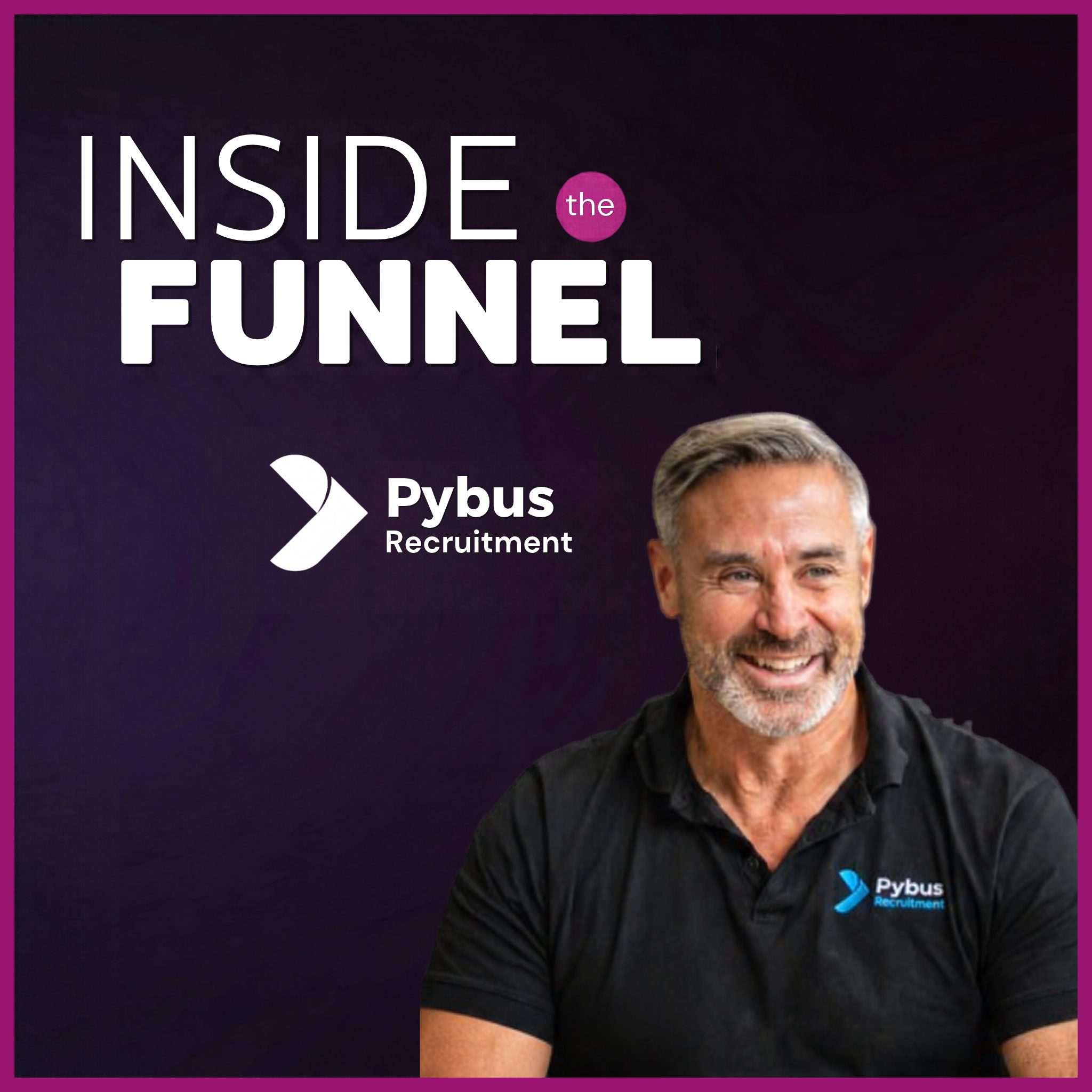
Who holds the keys now? Nigel McMinn on selling, hiring and AI
Available on


Knowledge used to be power in a sale, and the seller held all of it. Nigel McMinn joined the motor industry when some showrooms took customers’ car keys so they couldn’t leave. Thirty years on, buyers walk in with the price, the finance and the reviews already in hand.
Now Managing Director of Pybus Recruitment, Nigel joins durhamlane Co-Founder Richard Lane to talk about what that shift means for anyone who sells. He shares how he builds a team around industry experience, where he uses AI to open doors to new customers, and where he refuses to let it near the decision. If you lead a sales team, or you’re building one, this is a conversation about putting technology and people in the right places.
What you’ll learn
- Why Pybus Recruitment deliberately hires former dealership leaders as recruiters, and how customers respond
- Where Nigel draws the line on AI in hiring, and why human judgement still wins
- How an automated prospecting set-up turns a stalled vacancy into a warm reply, and why follow-up matters as much as the first touch
- How the balance of power in a car sale flipped over 30 years, and what B2B sellers should take from it
- The psychology of a buyer who expects a fight, and how listening changes the outcome
- Why the best salespeople are calm, curious and empathetic, and why sales deserves to be treated as a profession
About Nigel
Nigel McMinn is Managing Director of Pybus Recruitment, a specialist automotive recruiter working with franchised and independent dealerships, accident repair centres, parts distributors, finance and leasing businesses, and manufacturers. He trained as a chartered accountant at Price Waterhouse before spending three decades in motor retail leadership, including more than ten years at Reg Vardy, Managing Director and later Chief Executive of Benfield Motor Group, Managing Director of the Motor Division and Chief Operating Officer at Lookers, and Chief Operating Officer at Fleet Alliance. Across his career he has led teams from nine people to 9,000 and delivered more than 12 acquisitions.
Transcript
Richard Lane: So today I’m joined on Inside the Funnel by Nigel McMinn, Managing Director of Pybus Recruitment. Nigel’s spent the best part of 30 years in the motor industry, in senior roles at some of the UK’s best-known dealer groups, and now he’s finding the people who’ll run them next. He’s also definitely a friend to the business, a good personal friend of Lee and mine. So Nigel, it’s fabulous to have you with us. I’m going to call you an industry veteran, but I appreciate that might be seen as an insult these days. So tell our listeners a little bit about your background, and then we’ll get into today’s conversation.
Nigel McMinn: Yes, well, I think veteran is right, Rich, and I don’t find that offensive in the slightest. In fact, quite the opposite. I think having had 30 years in one industry actually feels like a privilege and it’s something I’ve thoroughly enjoyed. And so a little bit about me, yes, I qualified as a chartered accountant actually with Price Waterhouse in Newcastle and then realised I didn’t want to do accountancy and a job came up at Reg Vardy, which was a really sort of rapidly growing company. It was on the stock exchange. Very acquisitive.
Richard Lane: Yes, car, car, car, the car dealership.
Nigel McMinn: Car dealerships, yeah. Reg Vardy, for those that don’t know, was a big chain of car dealerships and probably the sort of most profitable public company of car dealerships, but still 30% owned by who became Sir Peter Vardy. So felt like a family business. And I worked for them for 11 years then went to Benfield as managing director for seven years, then went to Lookers for a number of years, six, seven years, and had four years recently at Fleet Alliance. I now have my own recruitment business that finds good people for car dealerships. So you know, still very much at the heart of the industry. Most of my customers are friends over that 30 years. And it’s an industry which, you know, I’ve thoroughly enjoyed and absolutely loved.
Richard Lane: Amazing. So, you’ve sort of dedicated your career to the automotive industry, and now you’re probably one separation away in terms of recruiting into the industry. So, yeah, which will be, I mean, I think we’ll discuss that because that would be a very different view on the industry as well, probably from being outside looking into a degree rather than being inside looking out. So, I mean, I think the thing we were going to talk about today, Nigel, was just this rapid shift, the shift of what it is to be a successful sales professional within any type of any type of industry. And, you know, I sort of look back and quite scarily, I also started my first proper sales job 30 years ago this year, 1996. And, you know, huge things have changed, but also lots of things are very much the same. So maybe let’s sort of start with your current view. And you were talking about the building of your business and, you know, how have you found that you’ve you’ve started to build your team. Have you gone out and find people with purely recruitment experience or have you found people with industry experience? If you’ve got both, which is better? Pros and cons, maybe get started there.
Nigel McMinn: Yeah, it’s interesting. So the business was started by a long-term friend and colleague of mine, Colin Pybus, hence the Pybus recruitment. And he did it, really established it just to keep himself busy. And so, of course, it goes without saying, you know, he’s worked in car dealerships like me all his life and has a big network of people, thought it’s an obvious thing. He’d been recruiting for himself for many years. So he had no experience in recruitment whatsoever, but taught himself. And he then recruited four more people who were from a mixture of recruitment background. And I think that kind of fast tracked his learning, but also somebody else from car dealerships. And then as you say, I’ve come into it, gone through the same journey as Colin, but learned the recruitment bit relatively quickly because he was able to teach me. And then I brought in Michael Scott, Richard Skinner, Tom Barton, all guys who have been at senior levels, very senior levels, in Michael’s case, running the Audi division for Lookers, 1,000 people, a billion of turnover, 11 to 12 million of profit, you know, big business in its own right all from car dealerships. And my experience is that firstly, they adapt to the recruitment really easily because it’s an extension of what they’ve been doing themselves. They are naturally brilliant with candidates. And of course, they know a lot of the customers. So it’s a very it actually suits people who are veterans of the industry. It suits those who’ve got a network and a bit of grey hair. And it’s interesting, I hear them on the phone and whilst there isn’t really any kind of selling as such, certainly not with the candidates, there is a level of persuasion. And I hear it and it’s subtle and there’s a nuance to it, which is brilliant to hear. And crucially, it sets our business apart, Rich, from all the other recruiters in the industry, because we’re the only one who’ve really staffed up with people from the industry and the customers respond very well to that.
Richard Lane: And it’s, yeah, that’s interesting, isn’t it? So that’s sort of, I don’t know whether that was a deliberate strategy or a strategy that you sort of leaned into.
Nigel McMinn: It’s become deliberate. It wasn’t, but it’s become deliberate. Yeah.
Richard Lane: What? It’s become, yeah, exactly. So you sort of started it, leaned into it, it’s become the deliberate strategy. And so, and it makes perfect sense when you think about, you know, industry experience, network, you know, the candidates coming to see you are probably impressed by you because of your tenure and experience. And then on the other side, you’re fulfilling with people that you’ve known and worked with for a long time. So it’s like the perfect fit. So why don’t others do that? Is it the cost?
Nigel McMinn: It’s a very good question. I hadn’t really thought about it. I suppose, you know, mine was opportunistic. Colin was selling the business anyway. It had become bigger than he wanted it to be and asked if I would be interested in running it for the agency, the private equity backed agency that was going to buy it. And I said, no, not really, but how much are you selling it for? And at the time I was kind of looking for something, contemplating, do I retire? And I thought, no, this is perfect. You know, I can, if it’s my own, I can dip in and out. I got that bit wrong, Rich, because I’m most definitely in full on now.
Richard Lane: So, no, he was subtly selling to you. Yeah, just it won’t take much of your time.
Nigel McMinn: He said, oh, it’s 20 hours a week. I’m saying to him, it’s more like 20 hours a day at the moment, Colin. So no, it definitely was something that was opportunistic, but yeah, it seems to work really well.
Richard Lane: And do you think that, is that a value, is that a potential long-term growth strategy? Or might there be an opportunity to sort of layer in people underneath those really senior guys and girls? You know, so you then create a bit of a blend of I’ve always been, probably background to my question, I’ve always been just such a fan of bringing people into the world of work and training them and giving them skills and helping them see that the commercial world is a fascinating place to be and a very rewarding one if you put the graft in. And I wonder whether in your business as a growth strategy, there’s that opportunity to sort of lay it underneath those senior people that you’ve got could be a great way of fast-tracking people potentially.
Nigel McMinn: Yeah, I mean, the first thing to say is that I don’t feel probably for the first time in my life, maybe the business is so small. I don’t honestly feel like I’ve got any kind of formulated strategy in my head. Michael and I run it really as business partners now. And I think we’ve just both got the view, let’s just have a good go at it, have some fun, and it’ll be what it’ll be, you know, but we’re not trying to double it or triple it or achieve any certain metrics. I think to your point, we like a dressing room for a football team. You don’t want all the same age and profile of players, you have to have a blend. And so I would hate anybody from a recruitment background to say that I had a bias against that and the business would not function well if we didn’t have specialist recruiters and a blend of those skills in the team. And definitely, whilst I say the veteran thing really helps, of course, some youth and energy and ideas, you know, we’re using AI extensively in the business and some of that is coming from the younger guys around who are showing the art of the possible and are aware of it. So I think like any team, Rich, you need a blend.
Richard Lane: Yeah, okay, no, I get that. And well, let’s sort of transition then, you’ve sort of brought it up yourself, but let’s transition to AI because, you know, what self-respecting podcast episode would not talk about AI at some point. So how are you, yeah, how are you finding it accelerating the business? I just saw on LinkedIn just this morning post from someone who gave Claude to every single one of their 50 plus sales team and their revenues individual contribution has gone down. So how are you finding it?
Nigel McMinn: Well, I think there’s some hype around it at the moment that’s unnecessary. And particularly actually in the recruitment sector, you know, this talk of AI actually conducting interviews, not just filtering and choosing CVs. I personally think that’s dangerous and I know it wouldn’t work for us and we don’t ever replace the human judgement. Albeit there are AI tools within the systems we use that in theory will do all of that. We don’t touch them because whenever we’ve tried them, it doesn’t pick the right candidates. It doesn’t do the right things. So it may do in the future, but for now, the human judgement of, well, hang on, that person’s had five jobs in five years and that can’t all be about the companies they’ve worked for or, you know, that person’s worked for that company for seven years. They’re tough to work for, so they must be good. You know, there’s a certain level of industry knowledge which I just don’t think AI can yet do. But we use it, we use it to make efficient some of the processes. So it writes job descriptions like you’ve never seen. It’s unbelievably good. So if a client hasn’t written one, we say that’s fine, leave it to us. And we can tell it about the client and the role and and bang, it writes it superbly. We never have to manually input CVs anymore. The system just reads a PDF or a Word document and populates all the fields and is done in seconds. So there are some neat little tricks like that. But the game changer for AI is, you know, given the nature of this podcast, you’ll be fascinated, is we use it for prospecting, for selling. So we’ve employed a tool that scans the motor industry, all car dealers, independent or franchise, accident repair centres and it knows who they are and it looks on their websites for their careers page and it looks on Indeed and Reed and other job sites. It scans how long a vacancy has been live for and as soon as it gets to, I think it’s three weeks, it says, that job’s been live for three weeks and they haven’t filled it and it sends an email which looks like it comes from my email address. It’s actually not. And says something simple like, hey, Rich, I’ve noticed it because it’s clever enough to work out who to apply to and gets the name and the contact numbers. Hey, Rich, I see you’ve had that vacancy for the service manager live three weeks now, we’ve got a couple of strong candidates, do you want me to send over details? And as soon as they reply back yes, it drops in my inbox.
Richard Lane: Oh wow, so so you so you’re not you’re not you’re not touching it until until you get that inbound.
Nigel McMinn: I don’t do anything with it at all until the customer says yes, you know, give me details. And then I send over a couple of strong candidates from our database. We’ve got over 20,000 CVs on our database. So I haven’t had one yet in about 70 odd where I’ve not been able to do it. And I send over the summary of the candidates and our terms and then business flows from that. And to try and get humans to do that, Rich, to scan all those websites, keep track of how long the vacancies have been live for. I mean, you could employ 10 people and they’d start from scratch every day.
Richard Lane: Wow, that’s a fantastic use then, isn’t it? So we taught, and it fits in very nicely with one of our, we’ve built some AI principles in terms of how we’re using AI inside of durhamlane, and one of them is AI for the mechanical, not the meaningful. And that’s exactly what you’re doing there. You know, it’s, you’ve got that set up, it’s scanning, it’s always on, and then it’s coming back and you’re then able to do the meaningful. I can see it very quickly going a step further, by the way, because it wouldn’t be so difficult for it to scan for relevant candidates out of your database to create a summary and to say, Nigel, I’ve prepared, you know, we’ve had, they’ve come in, they’re interested, I’ve prepared this for you anything you want to add, click send and done, you know, so yeah, interesting.
Nigel McMinn: Yeah, I think when I trust it to do that, I don’t trust it to do it at the moment. It could do. Funnily enough, I have just taken an extension for it because you can imagine that even though I’ve sent a summary of the candidates and terms, a lot don’t reply. And to then try and follow up what’s now 73 leads and know, well, that was from last week, that was from two weeks ago, which one do I do a second or third of? The follow up in itself has become a big task and I’m recruiting myself, I’m not just managing the team. And so actually for a relatively small amount of money, they’ve built a kind of add on to it that does all the follow up for me as well now.
Richard Lane: Right. Excellent. Because that is, I think, where a lot of the challenge lies with the whole front end using AI for your front end prospecting is because, yeah, you can, you know, things rarely happen with one contact, one touch. You know, they say it takes 5 to 12 connects touches to connect with someone. We find in our world that could be 20, it could be 34, it could be could be more. So it’s all about being professionally persistent. And once you’ve, and just because someone hasn’t responded to you, it doesn’t mean they’re not interested or it doesn’t mean they’ve not seen it. So, you know, ideally you want to keep that momentum going. I guess the other options you’ve got there, if everyone you’ve sent to you put them onto a mailing list and, you know, you’ve got those all sorts of things you could do there, aren’t there?
Nigel McMinn: Yes, and the value of it, of course, is many of these companies we’ve never dealt with before. And so they become recurrent repeat customers. So the value is more than just any placement we make off that one transaction. So I think there are meaningful ways AI can play a part. But, you know, what I’m trying to demonstrate is we exercise a degree of caution. We don’t just rush in. We use it where it actually makes a difference, so, as you say, practical.
Richard Lane: Yeah, and perhaps that’s, you know, maybe a good way of seeing that if I think about how you’re building your business with the types of people that you’re employing is AI is sort of.. looking at the doors that are slightly ajar and it’s getting a foot in. And then you’re coming in with all of your industry experience and the reputations that you and your people have and the experience of both sides of the world, of their world. And that’s really compelling. So yeah, actually using technology in the right place. Feels like that’s going to work really well for you.
Nigel McMinn: Yeah, it certainly works in a business to business, you know, sort of sale. I don’t think it would work. I can’t see how it would work the same in a retail environment. And of course, car dealerships predominantly are selling to consumers, but it works very well in a B2B environment.
Richard Lane: Yeah, yeah, I mean, that’s interesting in terms of with your experience of the dealership. I mean, dealerships, just as a consumer, seem to be changing rapidly as well in terms of much more self-serve, much more online. You know, how’s that industry feeling? Are you seeing, are you, are the shifts as seismic as they feel to someone like me looking on.
Nigel McMinn: Yeah, I mean, knowing that we might talk a bit about this, you know, I was reflecting last night, interestingly and fortuitously, I had dinner with my son and a very long standing friend of mine, Steve Bainbridge, who alongside playing for England and the British Lions at rugby and being second in the World Championships for indoor rowing and all sorts of other incredible sporting achievements. He has had a lifetime of studying and teaching sales in car dealerships. And so he is, as far as I’m concerned, the sort of guru on all this stuff. So of course, I was saying, What’s your view on how this has changed over the 30 or 40 years, Steve? And so, you know, it was a useful sort of aide-memoire because the psychology of selling to consumers, particularly in car dealerships, is really quite deeply thought through and has changed enormously in the 30 years. Remember that, of course, in 90% of cases, you’re also buying a car as well as selling one in part exchange and in finances inherently kind of underpinning everything. And so, you know, people generally these days, I’ll come back to this, but generally these days don’t talk about the list price of cars anymore. They talk about how much a month is. So we’ve become like the American model. They’ve been like that for the whole time I’ve been in the industry. So they talk about how much down and how much a month. And now the whole car industry thinks like that. So I think a lot of consumers would struggle to tell you how much the price of their car was, but they could tell you what they paid a month. Now, when I joined the industry, it was just coming out of the Wild West era where there was no process at all. Sales were employed. They were almost kind of self-employed and they did what they wanted, how they wanted. And customers had no information. There was no internet. You know, there were some brochures in the showroom, but you had to get it from the salesperson. And that’s where the kind of reputation, the Arthur Daley reputation of being ripped off came from because the dealer and the sales people particularly held all the information and therefore all the power and the consumers didn’t. It was up to their guile to sort of navigate that world. And I came into it in a period where a system called Pendle, I don’t know whether you’ve ever come across it, but Pendle, the Pendle process had been adopted by many dealers, which was a very rigid, scripted, controlled sales process, which tried to apply some form… Now you can imagine that the whole industry, most salespeople didn’t want to follow a process. They had their own way of doing it. But it had proven to be, it had come from America really, and it had proven to be very successful in a business called Skelmersdale Motors. And people then went, how are these guys selling so many cars? Well, it’s underpinned by this Greg Rigby initiated Pendle process. And Rich, you would, it makes my hair curl when I think how controlling it was. It used to go as far as, so the customer would come in. It didn’t matter which car they wanted to look at. They were established, well, what’s your budget first, then we’ll get to which cars we’ll look at. And because in those days, the cars were massively inflated in price, the customer was really focused on, well, what am I going to get from a part exchange? So they used to deliberately price the cars up far too high to give themselves scope, to give what the industry knows as over allowance, more for your car than it’s really worth. And so the whole focus of that sales process was to try and get a number from the customer as to what they thought the car was worth and then start the negotiation before they’d even seen the car they wanted to buy. And they used to they used to take the car keys for the part exchange off the customer so they couldn’t leave. They were they were kind of trapped and they wouldn’t even give a brochure to the customer unless they said, well, I’m here to buy today. If they committed, yeah, I’m here to buy then. They wouldn’t even take it forward. And gradually across the 30 years, because of the internet and the transfer of information to the customer, where actually now the customer owns all the power, that process has softened and softened and become a much more acceptable assistance to buy recognising that consumers today have all the cards. They can give one star or five star review on their experience. They can buy on the internet. They can see the prices from every other dealer. They can research to death the price of their part exchange or the car they want to buy. So it’s had to adapt. Of course, it’s become highly regulated by the FCA, which it wasn’t. So, you know, the whole thing is under a lot more scrutiny and a lot fairer and has had to adapt, but there is still some semblance of a process that sits underneath it.
Richard Lane: But that, I mean, for our listeners there, that is just the most perfect sort of whistle stop tour through where the power lies over the last 30 years in buying, selling a car. And what’s really, I’ve just got a real visual in my head of sort of power power, knowledge and knowledge and therefore power and how that’s just sort of flipped right down the sort of a U, isn’t it? It’s gone totally the other way. And now we’re at a place, as you say, where really the car showroom is literally a place where you can maybe go and see it in person, and and and have the buy facilitated for you, and when when I created our methodology, Selling at a Higher Level, you know, many years ago and still as relevant, interestingly, I believe, today as it was back in 2009 when I first put it together, that really came about and it’s called Selling at a Higher Level, but it’s really like how to help people buy from you. And so it sort of flipped from that world of sell, sell, sell into, yeah, really just following the AIDA marketing model of, you know, awareness, interest, desire, action really thinking, well, if people buy in a certain way, let’s help them, let’s help them buy from us in that way. And so that became, you know, our methodology in terms of how we sell is questioning, you know, it’s question based, it’s consultative, it’s all about qualification and spending your time where you could be most successful. But you’ve just painted that perfect picture there of of how that, I mean, that is, because 30 years isn’t actually that long, really, is it, when you think about it? But I know I called us veterans at the beginning, but it’s really, it’s not that long a period, but what a huge change in where the knowledge sits and therefore where the power lies when it comes to negotiation.
Nigel McMinn: Yeah, and of course, like any big change in life, there are some dealers that for a long while tried to stick to the old model and believed it worked. But they got one star reviews, customers started avoiding them like the plague. And so they’ve had to adapt to it because that’s the way the customers now dictate unless you help me to buy, if there’s any semblance you’re trying to trap me or trick me, then your business will suffer. I mean, it’s interesting, I’ve just ordered a car myself actually this week, a new car that won’t come until next year. And I was chatting to Steve about it last night. He thinks that gradually over the next 20, 30 years, there’ll be a shift even greater to the way I ordered my car. I did a load of research, configured one on the manufacturer configurator, knew exactly what I wanted, in what colours and spec, I knew what the price would be, what the lease payment would be, for the business. And I walked into Lloyd BMW by the BBC on Barrack Road and I was in 10 minutes because all I wanted to do was see a great guy, Tom Heslop, who I basically said, look, I’ve got what I need here, Tom. Can you just process the order for me? We don’t need to go through any process. And now if actually my configurator had joined up to his systems, BMW systems, which there’s a flaw, the BMW configurator ought to just join up to their ordering systems, then actually in truth, I could have ordered that car without even going into the dealership. I didn’t need to negotiate the price because that I knew they’re selling out really fast. So it’s a list price car. They just, you know, there you go, ex dealer for 30 years, and I’ve just paid list price for a car because I know that they sold the first allocation of 40 in two days. So there’s no point in negotiating. But I think over the next 30 years, and Steve thinks, that will become the norm where the customer really only needs to visit the dealership to maybe do a test drive or to see the colours in real life or see the shape or size of it, maybe to actually show their part exchange to get a proper value. But unless it’s some kind of physical action, you know, the selling could largely disappear.
Richard Lane: Yeah, well, it’s interesting, isn’t it? Because… You know, I still, I think we, and you know, listening to you talk about something you’ve just bought, you know, you could tell the sort of excitement and the sort of joy that it’s brought to you. And I, and I wonder whether maybe just a thought and something to think about, would you have would you have enjoyed the experience as much if you hadn’t gone into the to see, was it Tom, you said?
Nigel McMinn: Tom, yeah, no, I wouldn’t. No, you’re right. I wanted to go into the dealership.
Richard Lane: So I still think there is something, because actually, you know, I’d be quite happy to sell my car by going around and taking a video and doing all of that online. But actually, when you’re picking up your new car, like if someone just dropped it in my drive, I’ll be, I think that’d be a bit disappointing. I think it’s nice to sort of put a bit of effort gives you more value in some ways.
Nigel McMinn: Yes, I mean, and of course, I’m unusual in that, you know, I’ve worked in the industry for so long that, you know, I suppose I know what I’m doing. But even I still value going into the dealership and being amongst it and seeing the cars. So I wouldn’t want it to disappear altogether. But I think, I suppose the point is that’s extreme. But the amount of, compared to 30 years ago, where it was all about the sharp salesman imparting the information he wanted to persuade, you know, well, what’s it going to take to get your business today? Well, look, you know, I’ve got three people wanting to buy this car. You know, there was all sorts of nonsense, you know.
Richard Lane: Yeah, which, which, and you know, and good that those days are over, right? Because I think the, you know, I’ve spent my career sort of persuading people that sales is a wonderful place to build a to build a career and a career to be really proud of. And I think, you know, unfortunately, it comes with a super low bar because, you know, people don’t seem, people tend to, I fell into it. I was talking about the Happy Trip Up Club and that, you know, it was one of the best trips that I ever made was to fall into a sales job. But we should be promoting it as a great place to be and, you know, a great career to build and a hugely rewarding one. Yes, it’s changing a lot, but, you know, I think the sales professional is still required. And whether that’s because you’re building campaigns alongside your AI army that you’re using to help you get in front of the right people, I think that human connection is still really important.
Nigel McMinn: It is, yeah. And if you get into the sort of deep psychology of how this stuff works and it is now all about helping customers to buy and listening to them, you know, there are people like Stephen Covey, Dave Anderson, Paul Cummins, Grant Cardone, you know, these guys, you listen to them and they will tell you the psychology of why you have to help the customer and listen to them. And, you know, and if you really listen to them and understand them, it doesn’t feel like a fight to them. And I think Steve Bainbridge talks about quietening or putting to sleep the chimp. You know, you’d be aware of the Steve Peters, the chimp paradox. And a customer is programmed to come into a car dealership, big, shiny, intimidating place, everything very expensive, and because of the reputation of the industry, feels like they’re in for a fight. A good salesperson understands that psychology and seeks to understand the customer in order that the chimp quietens down and the emotions taken out of it, the customer relaxes and then there is a chance the salesperson can impart the information that helps the customer buy. But if he doesn’t listen, if he just talks over the top of them, largely like I’m doing, then, you know, the customer will stay in fight mode and you’ll never make any progress.
Richard Lane: Yeah, yeah, and our world is all around, you know, getting those initial conversations going. And that’s key for us is, you know, being interested to be interesting, just, you know, being able to very quickly build rapport, be unassuming, but most importantly, be inquisitive, you know, and actually, when you got your, when you get someone talking more and you’re doing more of the listening, you suddenly become much more valuable to them. So that sort of tends to be our approach.
Nigel McMinn: But you’re right that it’s a profession and it should be recognised by some sort of qualification because there’s a huge amount to learn. And when it’s done really well, and I’ve worked with literally thousands of salespeople over many, many years, and they now.. you know, I think sales still invokes some impression of some, you know, flashy, tanned, you know, sharp suited, you know, the reality is the best salespeople I’ve worked with look like you. You know, don’t take that the wrong way, but you know, they are genuine, decent people who are intelligent and really empathetic and calm, a calm person to be around, you know, that there’s an intelligence and a kind of understated, you know, an understated sort of lack of threat, you know, and it’s that that works really well. They’re the best salespeople and it is an art, it is a proper profession when it’s done properly and you see it done properly.
Richard Lane: Yeah, and I would sum that mindset of is that you’re helping people to buy from you, you know, you’re helping them to make the right decision. And so if you’re alongside them on the journey, they’re going to feel unthreatened, they’re going to feel supported, they’re going to be, and I think that, you know, that’s not to say you don’t challenge, because I think challenge is really important. And I think probably what, when I fell into sales, it just felt so obvious to me because, but then I’ve always put my feet in the shoes of the other person. So, so that’s just, you know, and so you could say is that nature, nurture? You know, I definitely believe that you can learn to be an amazing salesperson, but it helps if you’re always thinking about, well, what are they trying to achieve or what are they looking to do? What’s the best thing for them? How is it going to work? And then that inquisitiveness just sort of helped trip that conversation along and takes them on the journey. It’s not your journey, it’s their journey and you’ll have the privilege of being alongside them. So yeah, it’s a a great career to be. So, Nigel, this has been fascinating. So I think there’s so much in this. And again, that sort of that sort of idea around knowledge being power and how that has transferred through your industry, particularly over the years is I think something that everybody recognises. But, you know, probably for listeners, think about that in your world, the world that you’re selling into and helping people to buy from you and supporting them to achieve their goals. You know, what does that look like in your world? So something to think about. Really appreciate you being with us. Just before we go, just tell us your, you said you’ve got, you know, no strategy. There’s, you know, it’s, we’re just enjoying the ride. Have you got, is it UK only? Are you looking to go international? Just opportunity just to help you with a bit of strategy for the last couple of minutes.
Nigel McMinn: Yeah, we, it genuinely is all opportunistic. So we have started to do some stuff in Ireland. So we have invoiced in Euros. We’re just about to place a European sales director for a customer that will be based in Milan. So we’re not averse to doing it. The process looks largely the same. But the UK industry employs nearly 800,000 people in the part of the industry that we do. The only bit we don’t do is vehicle manufacturing and assembly, which tends to be engineering skills, which are different to sales and distribution. And to be honest, Rich, although it’s 800,000 people, It feels like a village. And we’re still, even though we deal with what feels like the majority of customers, we, you know, there’s a long tail of small businesses, literally thousands, something like 30,000 small businesses. And our business effectively becomes the outsourced HR department for that business. And that’s hence the AI really. You know, whilst I know probably the top 100 dealer groups, I don’t know the 30,000 and nobody can. And so there’s so much to go at that I think our plan is to stick to the UK. There is a weather eye looking at the States because many of the large dealer groups in the UK are now owned by American or Canadian companies. So there could be a natural shift for them to ask us to do some work in the States in car dealerships again. So never say never.
Richard Lane: Yeah, interesting. Well, look, we’ll get you back to talk about international expansion with the sales lens, Nigel, in the, yeah, well, we can, well, that’s a separate conversation. So yeah, that’s been, that’ll be fantastic. But look, thank you so much for sharing your journey and story with us. It’s been fabulous. I know listeners will get a lot of value from it. We’ve been through.
Nigel McMinn: Well, I might get you guys to help me with that if I do that.
Richard Lane: a number of areas around industry experience, the sales as a profession, profession to be proud of, AI in sales and how that’s helping you to get in front of more people and sort of get the [word to confirm] in the door open further with minimal effort, which is fantastic automation. And I think you’re adhering to one of our values, which is AI for the mechanical, not the meaningful. And then your whole recruitment strategy seems to be around that experience and meaning and teaching people the recruitment process and skills, building on their industry experience, which feels like a winning combination. So, Nigel, thanks very much for being on Inside the Funnel.
Nigel McMinn: It’s a pleasure, Rich. Now I’ve enjoyed the conversation and we should carry it on over a beer for a couple of hours somewhere.
Richard Lane: A hundred percent, so you say…
Nigel McMinn: Albeit it’s 11 in the morning, that’s probably not now.
Richard Lane: It’s beer. It’s beer o’clock somewhere though, surely. Thanks a lot, Nigel. Cheers.
Nigel McMinn: Yeah, sure. Alright, thanks a lot. Cheers.
Recent Episodes
-
 Who holds the keys now? Nigel McMinn on selling, hiring and AINovember 2026
Thirty years ago, some car showrooms took your keys so you couldn’t leave. Today the buyer holds every card. Nigel McMinn, Managing Director of Pybus Recruitment, joins Richard Lane to talk about that shift, why he hires industry veterans as recruiters, and how he uses AI to find new customers without letting it near the judgement calls.
Listen now -
 Why TitanX is betting against volume outboundOctober 2026
TitanX Founder and CEO Joey Gilkey joins Richard Lane to explain why more dials, tools and activity are hurting outbound, and what precision looks like instead.
Listen now -
 Why ‘channel’ is disappearing from B2B salesSeptember 2026
Ivan Bulaev has led channel, partnership and direct sales teams at HPE, Kaspersky, AWS and now Autodesk. In this episode of Inside the Funnel, he joins Richard Lane to explore why the word ‘channel’ is disappearing from B2B sales, how Autodesk structures its sales pods, and what it really takes to build a partner ecosystem worth trusting.
Listen now
