


B2B sales consultants improve pipeline by advising on or owning sales activity such as outbound prospecting, account-based programs, lead conversion, and meeting generation. But ‘sales consultants’ is a broad term that includes a variety of service models. Generally speaking, consultants will review your sales strategy and leave you a document, while outsourced SDR partners will run campaigns, engage prospects, qualify opportunities, and generate meetings, working as an extension of your revenue team.
Whether you are scaling into a new market or trying to expand existing customer accounts, the question of whether to bring in B2B sales consultants, outsourced SDR support, or build an in-house SDR team comes down to this: how soon do you need the revenue?
If you’re anything like the dozens of enterprise and mid-market leaders I speak with daily, your answer is probably: as soon as possible. Which means you need to understand the merits and drawbacks of all options, so you can make a decision and get moving.
Sales consultants vs outsourced SDR partners
At one end, you have classic sales consultants: experienced practitioners who come in, assess your go-to-market strategy, identify where deals are stalling or pipeline is leaking, and give you a plan for what needs to change. The deliverable is diagnosis and direction. Your team does the work that follows.
At the other end, you have outsourced SDR partners, like durhamlane. While we do the diagnostic piece, running audits and creating go-to-market strategies, we do not hand you a report and send you on your way. We manage sales development too, running the outbound, qualifying opportunities, and generating meetings. Outsourced SDR partners sit inside your revenue operation as if we were part of it, because for the duration of the engagement, we are.
Both models are useful. If your strategy is broken, fixing execution alone won’t save you, so combining classic sales consulting with your in-house team can deliver revenue. If your pipeline is thin because you don’t have the resources, the infrastructure, or the runway to build and ramp an in-house team, an outsourced SDR partner will get you to revenue much faster.
The true cost of building an in-house SDR team
There are obvious costs of in-house hiring, such as salary, national insurance, benefits, and equipment. A lot of sales leaders choosing between building and buying will simply compare these costs to the monthly retainer of an outsourced sales team. That comparison is incomplete because the highest cost of building an in-house SDR team isn’t financial. It’s time.
durhamlane published an entire report on why the ‘build it yourself’ model could be costing more than you think. Download it for the deep dive.
The time to hire a competent SDR in the current market can stretch to several weeks from opening the role to an accepted offer, and that assumes a smooth process with a good candidate pool, which is not always what you get for SDR roles in competitive hiring markets.
What B2B prospecting requires, in the current day, is research, signal awareness, multi-channel outreach, and consultative engagement from the very first touchpoint. In fact, it’s the total opposite of cold calling a list and hoping for a win on the first call. a procurement team that ultimately get the final word.

Once the hire is in place, the ramp period (the time it takes for a new SDR to reach consistent, meaningful pipeline output) typically runs between three and six months. During that period, you are paying a full salary, absorbing onboarding costs, and asking a sales manager to invest significant time in call reviews, playbook development, and day-to-day guidance.
The pipeline contribution during ramp is minimal.
Next, account for the technology stack a productive SDR team requires, including a sales engagement platform, data enrichment, intent signals, CRM licences, and the tools for management and reporting, and you are looking at anywhere from £4,000 to £20,000, depending on whether you are running a lean stack or a full outbound setup.
Then there is attrition. SDR roles carry some of the highest turnover of any position in sales, and when a hire leaves after twelve months, the investment in recruitment, ramp, and technology access starts again from scratch.
All of this should be factored into your decision-making process.
How can B2B sales consultants improve pipeline?
I’ll repeat here that the scope of work will vary depending on the type of ‘consultant’ you partner with. For instance, as an SDR partner, durhamlane typically:
- Defines and refines your ideal customer profile (ICP)
- Selects and researches target accounts
- Builds and runs outbound sales development
- Qualifies inbound and outbound leads against agreed criteria
- Manages pipeline through to handoff
- Reports on activity and outcomes
This improves pipeline in two ways:
1. Speed
A hands-on specialist with an established team, proven methodology, and a functioning technology infrastructure can be operational within weeks of engagement. There is no ramp curve on a team that has already run dozens of comparable enterprise campaigns, because the process of learning the message, the market, and the qualification criteria starts immediately and with people who already know how to ask the right questions.
2. Quality
durhamlane SDRs work from the Magic 35 qualification framework, which means we achieve an average conversation-to-meeting rate of around 36%, peaking at 49% in stronger months. Fewer unqualified meetings waste account executive time, and more of the right conversations reach the right stage to deliver revenue.
For example, working with RS Industria, durhamlane generated 140 Sales Qualified Opportunities and more than £700,000 in pipeline, averaging approximately eight qualified opportunities per month from just two resources.
Similarly, with PwC, our SDRs produced 54 qualified opportunities over 120 resource days. And in a broader enterprise demand program, the team generated 1,028 MQLs, 525 SQLs, and an estimated £6.26 million in pipeline, with £680,000 in closed-won revenue.
These results show what a well-run B2B sales firm can produce when the methodology, the target market, and the qualification criteria are properly aligned.
For sales leaders whose immediate concern is maintaining pipeline coverage while filling a gap left by underperforming SDRs or entering a new market, partnering with sales development reps removes the ramp delay, brings the infrastructure, and delivers qualified opportunities.
Bonus: B2B sales specialists in enterprise sales cycles
Enterprise sales cycles run from six to eighteen months, involving multiple stakeholders across multiple functions, and place specific demands on the people generating and managing pipeline that shorter, more transactional B2B cycles do not.
For SDRs, the challenge is more than getting a conversation started. Depending on the talent you’re able to bring in-house, you may struggle to sustain engagement across a long buying process, bring in the right stakeholders at the right time, qualify enough to avoid wasting account executive time on opportunities that will never close, and maintain forecast accuracy.
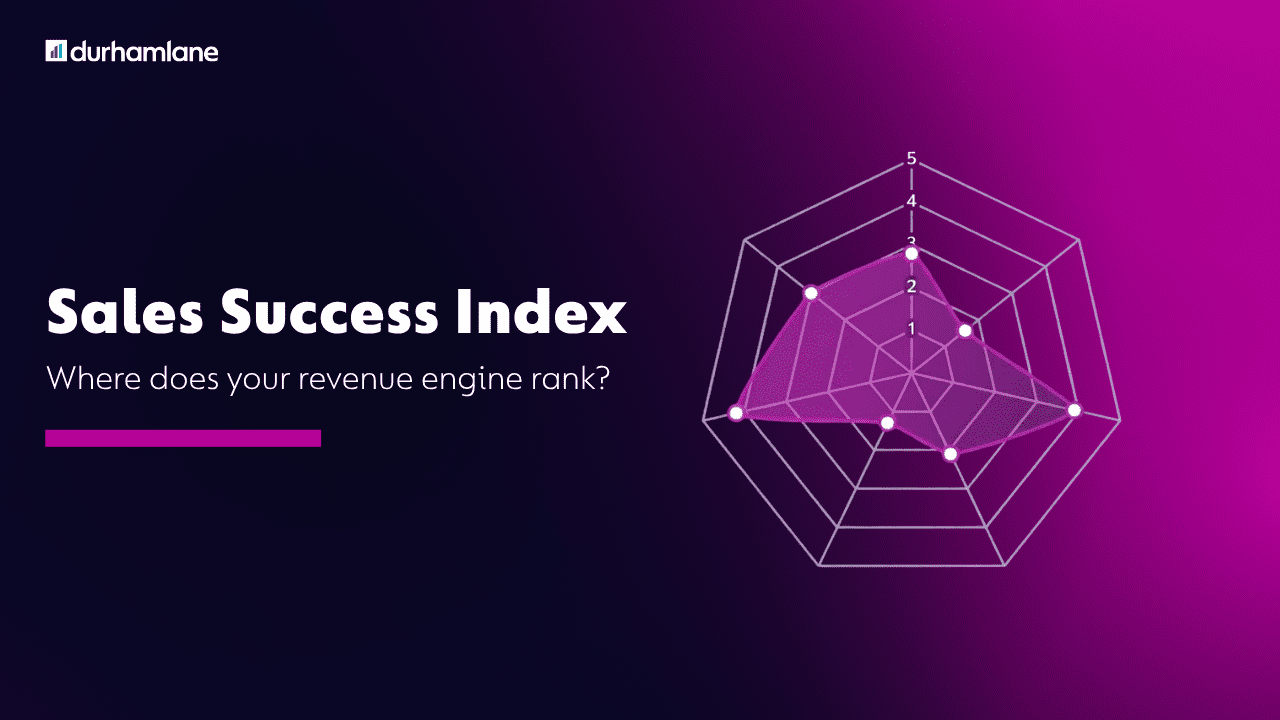
On the flip side, B2B specialists in enterprise sales cycles bring a proven approach. As mentioned earlier, durhamlane’s Magic 35 Diagnostic Toolkit provides a structured qualification framework (seven criteria, each scored out of five) that gives a consistent, evidence-based view of opportunity quality at any point in the cycle.
Meanwhile, our ‘Selling at a Higher Level’ methodology places a specific emphasis on engaging at the level where enterprise decisions are made and in a way that naturally allows for commercial conversations to happen in a consultative manner.
Can outsourced partners help with account-based selling?
Account-based selling, and the account-based marketing campaigns that support it, require a fundamentally different approach to pipeline generation than volume-based outbound. You wouldn’t be the first to assume you need somebody inside the business to sell in this way.
Account-based selling involves deep research into a defined set of target accounts, personalised outreach that shows an understanding of the buyer’s situation, and coordinated engagement across multiple stakeholders rather than one-to-one prospecting.
Unfortunately, most generalist SDR teams are not well-equipped for this, because the skills and the discipline it requires are specific, and because the temptation to increase activity volume is always in tension with the patience that account-based work demands.
B2B sales consultants and SDR partners, on the other hand, can help clients define the right target account list, segment accounts by propensity and fit, build messaging that speaks to the specific business context of each account, and coordinate sales activity with content and marketing activities.ve no real chance of closing. For more context, our piece onenterprise sales win rates is worth reading.
How to choose a B2B sales partner
The starting point is knowing your own objectives.
Before approaching any B2B sales company, get specific about which part of your pipeline needs help, whether that is top-of-funnel volume, mid-funnel qualification, a specific market or vertical, or a defined set of target accounts, and what you would consider a successful outcome.
Of course, providers that ask these questions are usually more trustworthy than those that jump straight to what they can offer.
When evaluating B2B consultants, look for the following:
- Deliverables that meet your needs. General sales consultants do the strategic thinking and offer guidance, while outsourced SDR partners operate as part of your business to run outbound campaigns and convert inbound leads for you.
- Proven results in a comparable sector. Ask for SDR case studies with specific numbers, i.e. qualified opportunities, pipeline value, conversation-to-meeting rates, and not just testimonials. Any firm worth working with should be able to show what they have achieved for clients in similar markets.
- A defined methodology. Sales leaders operate from a structured qualification framework, a repeatable but tailored outreach process, and a clear definition of what a qualified opportunity means for your business, and they will be transparent about all of this before you sign anything.
- Transparency on metrics and reporting. How do they report? At what cadence? A consultancy that is confident in its work will not resist scrutiny.
- Access to the right technology. Enterprise prospecting requires a sales technology stack covering data enrichment, intent signals, sales engagement platforms, and the analytical tools to track what is working. Confirm the consultancy brings this infrastructure rather than relying on your existing setup.
A few red flags to watch for are:
- Reluctance to share detailed case studies
- Guaranteed volume commitments with no qualification criteria attached
- A service model that looks the same regardless of the client’s market
Enterprise sales is not a rinse-and-repeat activity, and a firm that treats it as one will not deliver enterprise-quality results.
In many cases, a sensible first step is to arrange a B2B sales audit or diagnostic; a detailed assessment of where your current pipeline is breaking down, what the qualification data tells you, and where the gaps in coverage or conversion are most problematic.
What do outsourced sales partners charge for projects?
Naturally, the campaign scope, the seniority of the resource, and the engagement model all affect investment figures significantly. As a very general overview, here are some common arrangements in the outsourced SDR space:
- Monthly retainer. The standard model for ongoing pipeline programs covers a defined set of resources, activities, and reporting for a set fee. For enterprise and mid-market, retainers typically run anywhere from £5,000 to £40,000 per month, depending on team size, scope, and the level of strategic input included.
- Project-based. A fixed fee for a defined piece of work, i.e. a new market entry campaign, a one-time account-based campaign, or a demand generation sprint. Costs typically range from £10,000 to £100,000 or more, depending on complexity and duration.
- Hybrid. A retainer base with performance-related components, aligning the consultancy’s commercial incentives more closely with the client’s outcomes, such as sales-accepted leads or SQLs. For performance contracts, the vendor needs to be able to overperform, ensuring both parties reap the rewards.
The right way to evaluate cost is not to compare the retainer figure to a headcount salary, because that comparison omits too many variables.
Instead, compare the likely time-to-first-qualified-opportunity. If a single SDR hire at full cost will not produce a meaningful pipeline for four to six months, what does that mean for revenue? A well-scoped consultancy engagement can generate qualified opportunities within weeks of signing on the dotted line.
Put differently, the question is not what the partner will charge, but what the revenue delay of not acting (or of waiting for an in-house hire to ramp) is costing in the context of your specific pipeline target and sales cycle length.
When does building an in-house sales team make sense?
In-house makes most sense when your product is technically complex in ways that require deep, sustained immersion, and where the sales conversation is as much about integration architecture or regulatory compliance as it is about commercial value, or where an external team would need months of product knowledge before they could hold a credible conversation.
I’ll caveat that by saying durhamlane SDRs regularly sell into complex environments such as medical technology, insurtech, and pharma and life sciences, so don’t assume your market is too complex right off the bat.
Recruiting in-house does make sense for senior account executives and enterprise relationship roles, where long-term continuity with a named account portfolio is central to the commercial relationship, and where knowledge of the buyer’s business compounds over time in ways that are genuinely difficult to replicate with an external team.
Many enterprise and mid-market businesses find that the most effective model is a hybrid one, where B2B sales consultants or SDR partners build the pipeline and prove the playbook, while the in-house team takes over execution as the model matures.
Partner with durhamlane for revenue growth
Outsourcing to sales consultants or SDR teams isn’t always the right choice, but for enterprise and mid-market businesses with ambitious pipeline targets and longer, considered sales cycles, they tend to be a faster and more cost-effective route to qualified revenue in the zero-to-twelve-month horizon, where an in-house hire is still recruiting, ramping, or finding their feet.
Book a call to discuss whether durhamlane is the right sales partner for you.