


Key takeaways
- A lead, a prospect and a sales opportunity sit at different stages of buying intent. Reporting them as if they’re interchangeable inflates your pipeline without revenue.
- A sales agency measured on volume has no real incentive to qualify hard before a name reaches your sales team.
- An unqualified handoff adds work to your sales cycle, increasing resource and expense.
- durhamlane’s Magic 35 framework qualifies every conversation against seven criteria before it’s ever passed to a client’s sales team as an opportunity.
- Agree what “qualified” means with any sales agency in writing before the engagement starts, and hold the relationship to that standard throughout.
What if I told you that a sales agency can hit every activity target set and still hand your team a diary of meetings that are never going to buy?
A lead, a prospect and a sales opportunity are three different things. Each one sits at a different point in the buying journey, with a different level of proof behind it. Only, many agencies don’t make that clarification early on.
When a sales agency passes you leads and labels them as opportunities, you end up with a pipeline that is technically “healthy”, but will never translate to won deals and revenue. Not only does this waste your budget and time, but it also harms the entire outsourcing industry, and for sales development partners like durhamlane, that’s a problem!
So, whether you’re already working with a sales agency, or you’re researching what to look for, this post sets out why a lead, a prospect and a sales opportunity must be kept separate, what it costs your team when a partner blurs that distinction, and how to hold them to account.
What’s the difference between a lead, a prospect and a sales opportunity?
A lead is a contact who matches your target profile and nothing more. A prospect has shown some signal of interest, but hasn’t been vetted against anything. A sales opportunity has been qualified against defined criteria, including budget, need, timing and authority, and has a genuine chance of closing.
- Opportunity: has been through that assessment. Budget, need, timing and authority are all confirmed, and the deal has a realistic path to close.
- Lead: fits your ideal customer profile on paper. No sales conversation has taken place, and no interest has been confirmed either way.
- Prospect: has engaged in some form. They’ve opened an email, taken a call, or downloaded a piece of content, but hasn’t been assessed against your qualification criteria.
| Stage | What’s confirmed | What isn’t |
| Lead | Fit with your target profile | Interest, budget, authority, timing |
| Prospect | Some level of engagement | Whether they meet your buying criteria |
| Opportunity | Fit, interest, budget, authority and timing | N/A – it’s ready for your Business Development Manager |
What’s most important when outsourcing sales is setting clear definitions on what qualifies as a lead versus an opportunity, and understanding the difference between goals such as lead generation versus appointment setting versus sales development.
For example, lead generation delivers contacts matching a target profile, with no qualification behind them. Appointment setting gets a meeting booked, measured by attendance rather than fit. Sales development, on the other hand, covers both and adds the next step: confirming budget, need, timing and authority long before you sit down with the potential customer.
In short, when you partner with B2B sales specialists, you should expect reporting and KPIs to cover sales opportunities, estimated pipeline, and revenue won (more on that later).
Is your sales agency skipping qualification?
Many sales leaders outsource because it saves time and achieves results faster than recruiting and training. Your team can stop focusing on prospecting and give all their attention to closing. But this is only possible if your sales agency has done thorough qualification work.
| If your sales agency doesn’t qualify properly | The impact on your team |
| BDMs inherit the filtering work | Already stretched sellers spend their time in useless meetings, disqualifying instead of converting and closing |
| Meetings get counted as pipeline | Coverage ratios look healthy while forecast accuracy is skewed |
| Your best people get spread thinner | Experienced closers end up doing entry-level qualification instead of running deals |
| Revenue efficiency drops | Cost per closed-won deal rises even though “lead volume” looks steady |
| Buyer engagement gets harder | A poorly qualified conversation burns a prospect’s limited attention, and that door often doesn’t reopen |
| New account development stalls | Effort goes into the wrong accounts instead of building genuine new customer relationships |
This is especially true if a team already lacks inside sales experience or the sales technology to qualify efficiently, which is precisely the gap many sales leaders bring in a sales agency to close. If the partner hired for that expertise isn’t applying it before sales handoff, the gap hasn’t actually closed. And you’re paying for it twice.
There’s a retention cost too. BDMs working leads that were never going to close lose motivation quickly, and that’s often when employees start looking elsewhere. Talent is hard enough to find and keep without a sales agency adding to the churn!
What separates high-performing sales partners
Here’s what to look for in a sales agency pitch:
- A defined qualification framework. Some default to BANT, MEDDIC and CHAMP, which are fine and popular for a reason. But if a sales partner has a proven framework developed through years of experience, it says a lot about their focus on qualification.
- A willingness to say when a target doesn’t fit. A partner that never disqualifies anything isn’t really qualifying at all.
- Reporting built around funnel conversion, from sales-accepted lead to opportunity to closed-won, rather than one activity number like ‘booked meetings’.
- A written agreement on what “qualified” means, settled before the engagement starts and supported by a tailored sales playbook.
Any agency confident in its own process will hold up against all four.
Tie fees, or a meaningful part of them, to a stage further down the funnel, such as a sales-accepted lead your own team has validated, or a closed-won opportunity. At durhamlane, success fees only trigger once a client’s sales team confirms a meeting meets the agreed qualification criteria, which keeps the incentive pointed at fit rather than volume.
What good qualification looks like: durhamlane’s Magic 35
This qualification discipline runs through everything we do, built on our wider methodology, ‘Selling at a Higher Level’, which treats selling as a strategic, consultative discipline rather than selling features.
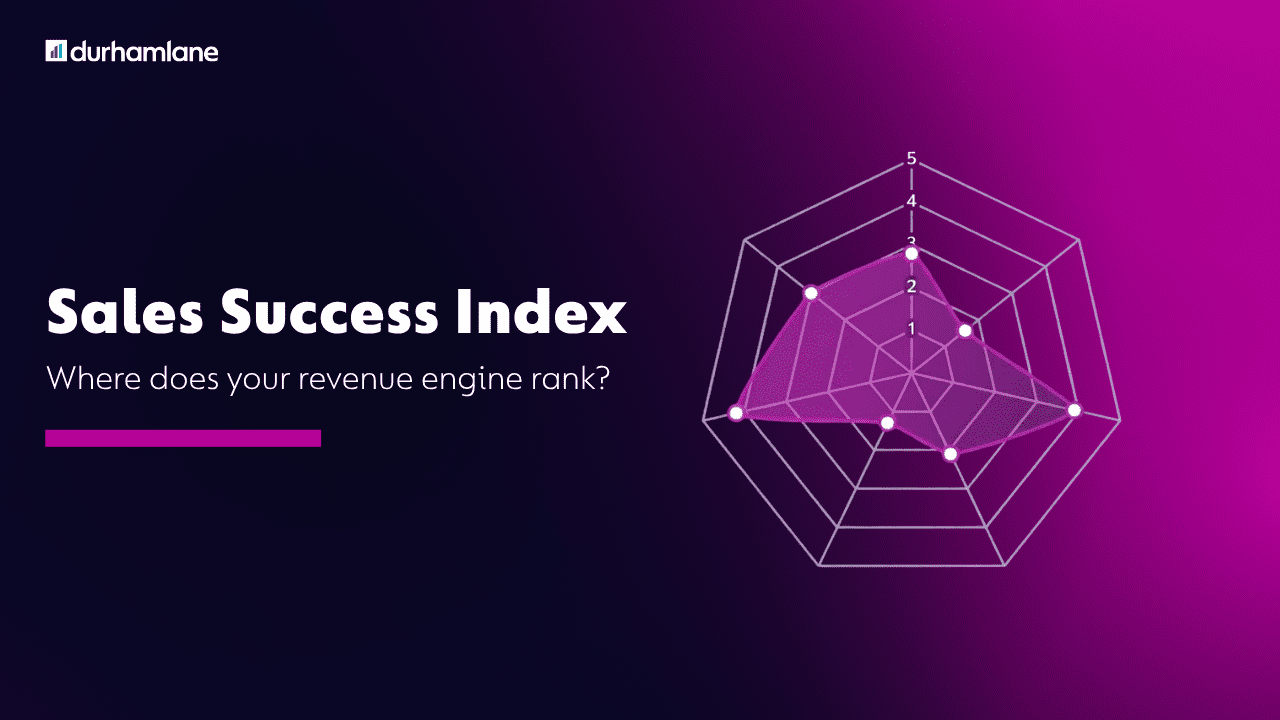
Our Magic 35 framework is the practical tool underneath that philosophy. Every conversation is worked through against seven core criteria before it’s passed to a client’s business development team as an opportunity, giving both sides a shared, structured standard for what “qualified” actually means. It’s fed by our ‘Find and Create’ approach to sourcing and prioritising accounts, so the qualification work starts from a well-targeted list rather than a broad one.
| Download the Magic 35 Toolkit and have sales conversations with purpose. |
This isn’t included here as a pitch. It’s an example of the rigour worth expecting from any sales agency you’re evaluating, whichever framework they happen to use.
Questions to ask a sales agency before you sign
A short set of direct questions can tell you plenty about a prospective partner.
- What does “qualified” mean in your reporting, and can you show it to me?
- What percentage of what you hand over converts to a closed-won opportunity?
- Will you tell me when a target doesn’t fit, or do I only hear about the ones that do?
- How are your SDRs paid, and does that reward qualification or just volume?
- What happens to a lead that doesn’t convert to an opportunity? Is it recycled, dropped, or never reported at all?
- Can I see your qualification framework, not just your outreach cadence?
A sales agency that trusts its own process will answer all six without needing to think about it.
Metrics that tell you whether a sales agency is working
It’s easy for a sales agency to report ‘booked meetings’, but this isn’t a useful metric for judging future revenue unless it’s supported by other figures. These tell you more:
| Metric | What it tells you |
| Lead-to-SAL conversion rate | Whether targeting and initial outreach are hitting the right accounts |
SAL-to-opportunity conversion rate | Whether real qualification is happening before handoff |
Opportunity-to-closed-won rate | Whether what reaches your sales team can actually close |
Revenue sourced | The actual return on what you’re paying for |
| Cost per closed-won deal | Whether efficiency improves as volume grows |
Final tip: Definitions should evolve over time
Revisit what “qualified” means every time something structural changes: your ICP, your average deal size, etc. Each of those can affect the definition you agreed at the start of the engagement. A leading sales development partner will proactively review and update as they work, based on the results and your feedback.
To see how a structured qualification framework like Magic 35 compares with what you’re getting today, get in touch, and we’ll talk you through it.
Frequently asked questions
What’s the difference between a lead and a sales opportunity?
A lead simply matches your target profile. A sales opportunity has been qualified against defined criteria, including budget, need, timing and authority, and has a genuine likelihood of closing. Treating the two as equivalent overstates how much real pipeline you have.
Should a sales agency report leads or opportunities?
Both, but clearly labelled and never blended. A sales agency should show conversion at every stage, from lead to sales accepted lead to opportunity to closed-won, rather than one headline number.
How do I know if my sales agency is qualifying properly?
Ask to see their qualification framework in writing, check what percentage of what they hand over converts to closed-won revenue, and see whether they ever tell you a target doesn’t fit. A partner that never disqualifies anything isn’t really qualifying at all.
Does this apply to an outbound sales agency running cold calling campaigns?
Yes, and arguably more so. An SDR qualifying over the phone has no inbound signal to lean on, so the same lead, prospect and opportunity distinction has to hold regardless of channel, whether that’s cold calling, email or LinkedIn outreach.
How do I hire a performance-based sales agency?
Tie fees, or a meaningful part of them, to a stage beyond a booked meeting, such as a sales-accepted lead or closed-won opportunity, and get that agreed in writing before signing. Ask how individual SDRs are paid too, since a rep rewarded purely for meetings booked will optimise for volume regardless of the wider commercial model.
What is durhamlane’s Magic 35 framework?
Magic 35 is durhamlane’s qualification framework, used to confirm a target genuinely qualifies as an opportunity, not just a lead or a prospect, before it’s ever passed to a client’s BDM team.